Thursday October 15, 2026: Maximum Shelf: Human Again
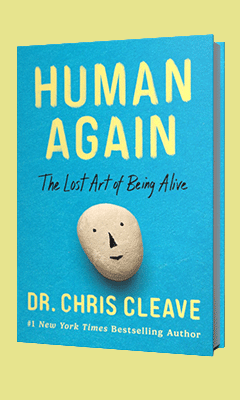
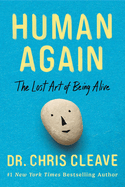
Human Again: The Lost Art of Being Alive
by Dr. Chris Cleave
What does it mean to be alive in the modern world? This is the central question posed by Human Again, Dr. Chris Cleave's timely and beautifully written nonfiction narrative work. Known internationally for novels (Everyone Brave Is Forgiven, Little Bee) that explore the effect of trauma on the psyches of his characters, Cleave, an existential psychotherapist and practicing clinical psychologist, combines neuroscience, insights gleaned from his practice, and storytelling to examine why so many people today feel anxious, overwhelmed, or unable to find joy in their lives. Through his own life experiences and those of others he has counseled, Cleave illustrates how we have become separated from ourselves and the world around us, and offers a remarkably compassionate guide to reclaiming our essential humanity and "making the world itself into our medicine."
At the heart of Human Again is the idea that people who are struggling are not "broken," with problems that need to be fixed. Instead, Cleave suggests that many of the difficulties that people experience now are natural responses to the cumulative pressures of today's world. While we are typically encouraged to treat and repair ourselves in ways that range from becoming more productive to simply changing our mindsets, Cleave argues that our feelings of overwhelm are due to the enormous amount of emotional, social, historical, and personal weight we carry. "Even in the womb," Cleave says, "every human being is already carrying trauma." This collective human trauma, combined with personal history, loss, disconnection, and environmental stress "can suddenly go exponential" and cause us to collapse under our private and human weight. We have learned to cope through escapism, busyness, and resignation, Cleave says, but these strategies are limited and often destructive. Rather, we need to understand "the art of living with the human weight: not to change, but to cover the human condition."
To this end, Cleave explores 10 important relationships that shape human life, all of which can be used as "medicines" for our human psyches. These relationships include those with our bodies, brains, work, transactions, place, planet, history, other people, childhood, and individual choices. Cleave considers each with extraordinary insight and gifted storytelling, using examples from his own life, his practice, research, and philosophy. In discussing our relationship with history, for example, Cleave points out how the legacy of intergenerational trauma affects the way we view ourselves as individuals. "We need to grieve our history, in order to free ourselves and our descendants," Cleave states. "This is how the history of the world becomes medicine for our minds."
When it comes to understanding our relationship with the human race, he writes, "Madness always begins when a society reduces our ability to have unmediated contact with humans of varied outlook." When our access to alternative viewpoints is limited by media monopolies or propaganda, we become disconnected from each other and thus destabilized. "And as disconnected people instead grasp disembodied ideas to anchor their minds instead, individual distress suddenly coalesces into collective insanity," Cleave states, adding, "This is when people start wearing brown shirts or red hats."
It is in his discussion of our relationships with our brains, however, that the title of this book becomes particularly meaningful. He believes our wildly accelerated society has caused people to forget how to live as human beings. Technology, consumerism, work culture, social expectations, and constant demands for productivity can make life feel like an endless attempt to keep up. The solution, Cleave posits, is not to become better at coping with these constant pressures, but to reconsider whether the pressures themselves are compatible with human needs.
There is so much to recommend in Human Again, such as Cleave's extraordinarily empathetic and gentle approach, and his ability to present abstract concepts in a lyrical and relatable way. Perhaps the most appealing aspect of the book, however, is its rejection of shame. Cleave explains that we are so often taught that we can improve our lives if only we work harder, exercise more discipline, or follow the right system that when our attempts founder, we are left feeling guilty and ashamed as if we have personally failed. By reconsidering our relationships, the circumstances that have shaped us, and our very humanity, we realize that our burden is shared and we can let go of feelings of shame. This is a tremendously freeing and genuinely hopeful message that will likely resonate with all readers. This is not to say that, as individuals, we are absolved of responsibility but, as Cleave so eloquently guides readers throughout, our first task is to simply slow down and reconnect with ourselves and the world. This is a simple yet challenging concept as we have been trained to continually perfect ourselves, but as this compassionate and beautifully written book illuminates, only through rediscovering how to live can we become human again. --Debra Ginsberg
Scribner,
$30,
hardcover, 336p., 9781668229842,
March 2, 2027
Human Again: The Lost Art of Being Alive
by
Dr. Chris Cleave
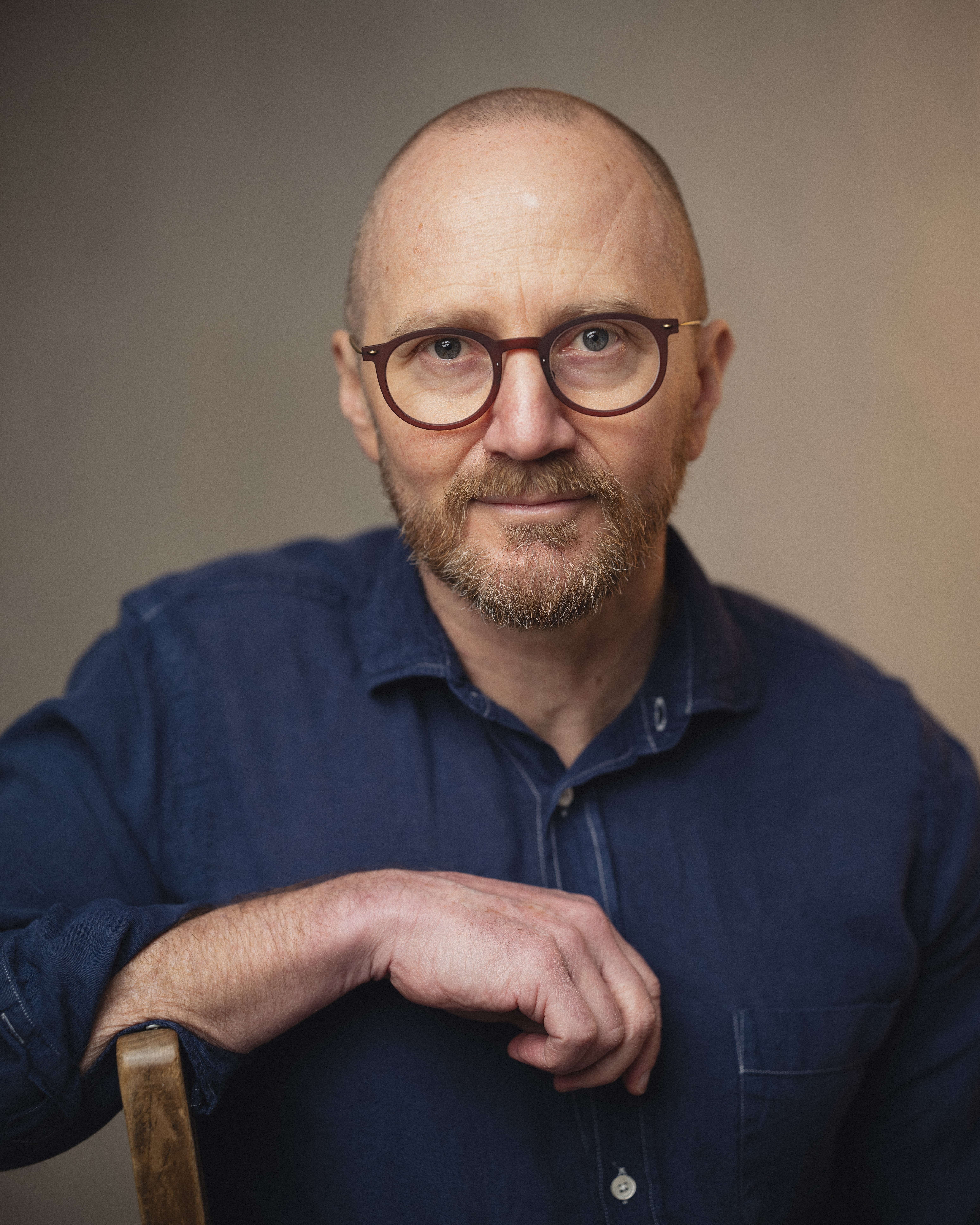
Dr. Chris Cleave is an existential psychotherapist, practicing psychologist, and writer whose work explores how human beings recover meaning, connection, and agency after trauma. His five novels--including Everyone Brave Is Forgiven and Little Bee--have been translated into 35 languages, and he has spent two decades writing about the inner lives of people under extreme pressure. Human Again, his first work of nonfiction, is a hopeful practical guide to understanding why so many of us feel overwhelmed, disconnected, or stuck--and how we can restore our relationships with ourselves, one another, and the world we're living in. Alongside his literary career, Cleave maintains a clinical practice in London.
How has the process of writing nonfiction differed from writing novels? What has been most challenging about the transition?
What I wanted to do with Human Again was write something that was genuinely and immediately useful for people, a book that was medicine in itself. And to do that, I needed to talk to people in my own voice, finally, and say this is what has worked for the people I see in my work as a therapist, and this is alsowhat has brought me back to life and helped me find joy. But there was an enormous vertigo of writing nonfiction and a feeling of being naked that was at once scary and liberating. I was a kid who was lonely, sad, and who wasn't always allowed to be himself, so I learned to tell stories and became a novelist. That's what kept me alive. Because I love people and am curious about how they survive in the world, my novels are about people who have endured trauma and the psychology of that. But when you're writing a novel, it's always in code, you're always wearing a mask. When I hit 50, I thought, maybe I can take the mask off now and speak directly to the people I know and love, which is this global community of readers who have always accepted me. That was a big moment for me because I was so used to hiding who I was.
Therapists famously keep their own lives private, but you write extensively about your personal life experiences and struggles in the book. Was it difficult to share yourself on the page in this way? Or did it feel liberating?
I don't think this is an age in which we can afford to hide our hearts. In the same way you don't want to hoard money, you don't want to hoard your own life story either, or your own secrets, or your own knowledge. For a long time, it has served me well to keep that kind of firewall between the world and me. That's what helped me to be a novelist and to be a therapist. But there comes a point where you need to stop hoarding it, like a dragon with gold in your cave. I've worked with so many people who have been brave enough to tell me their stories and trust me to respect them and not judge them. I have my own therapist and my own supervisor and I've told these kinds of stories to other people who have handled them with love and respect, and I expect the world will treat me with love and respect. I talk about this idea in the book, that if people have let you down and abused your trust then actually you need to trust people more, not less. You need to let go of shame, let go of this idea that there's something to judge in your life.
How close are we, in your opinion, to a tipping point where we risk losing our ability to connect with our own humanity?
I think the fact that you're asking that question is our defense. I think the pain that we're feeling, all of the flashes of fear and hate and anxiety and guilt, is the feeling of something within us that doesn't want to disappear. This is our deep humanity, and our collective feeling for each other and for the planet. The fact that it's hurting should fill us with hope. If we were feeling nothing as we accelerate into this very dark age, then we would need to worry. But I don't worry that there's a tipping point that we cannot come back from because our humanity is extremely stubborn. It will survive very dark times, and maybe it will need to now. But I also think that we can't be complacent about it. Our humanity is a resource and an ecosystem, just the way the rain forest is, so it will grow back but we need to make it our business to grow it back. That is our main job right now, to reinhabit and regrow our humanity itself.
On a related note, do you think that AI (which is, by definition, not human) is impeding, or perhaps even destroying, our ability to connect with our human nature?
I'll say something really serious here, which is that we mustn't pin all of our human evils on AI.
Dehumanization is something people have done to each other long before AI showed up. For example, the times that Europe fell into in the 1930s and '40s was a dehumanization of entire groups of people by other groups of people. We didn't need AI to do that for us. A lot of what is happening in our world at the moment has to do with a resurgence of those dehumanizing energies where we excuse ourselves of our own duty of human empathy, human care, human compassion, and human inclusion in the name of some political or economic view. Yes, AI is accelerating that process, but we built it. We need to not let ourselves off that hook. But I would also say that AI is revealing what is available to be lost and people are resisting that loss. There are debates about how much we should use AI and what this resistance reveals is an opportunity to rehumanize ourselves.
Is there cause for optimism despite these difficult times?
I think the message of the book is that we can certainly start to function better within our own worlds. We can start to repair the relationship between what is surfacing in those difficult feelings, which is our humanity, and the world in which it was always meant to live. We can re-create those conditions around ourselves, and then once we've made our personal world a more livable and humane environment, it automatically starts connecting to all the people who are doing this as well. This is not a book that says we can do everything on our own, but it is a book that says, actually, it's amazing how much we can do. We do need political change and we do need social change, and we can't do all of that on our own as individuals, but we can meet the process halfway and do much more than I think we realized we could. And so, when you look at these deep human practices that our ancestors knew how to do and that we have started to forget how to do, you realize the wisdom in them. When we neglect them, the symptom is that we start to feel a bit crazy. We're not crazy, we're just dehumanized, and there is a way to get that humanity back. --Debra Ginsberg