

 Despite its vast range of publishing, Skyhorse has been pigeon-holed by many. As Lyons said, "People think of Skyhorse, and think they know more about Skyhorse than they do."
In 2015, Skyhorse partnered with David Talbot, founder of Salon, to launch Hot Books, an imprint focused on timely nonfiction investigative titles of about 40,000 words. Each book drew on deep-dive reporting, filling the gap left by larger media outlets that had pulled back from in-depth investigative work.
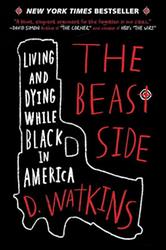
The imprint's first title, The Beast Side: Living (and Dying) While Black in America by D. Watkins, became a New York Times bestseller. Talbot commissioned the book around the time of the Ferguson protests and accelerated its release as debate over police shootings of Black men continued.
 Hot Books content--excerpts, scoops, and author interviews--appeared on Salon, and the two shared a co-branded landing page that featured other Skyhorse titles. Books were published simultaneously in hardcover and digital formats, with trade paperbacks following.
In 2016, Hot Books published Joseph Hickman's The Burn Pits: The Poisoning of America's Soldiers as well as books by Robert F. Kennedy, Jr., Dick Russell, Arsalan Iftikhar, Nicholas Schou, and Mark Hertsgaard.
From Hot Books to books too hot for others to handle
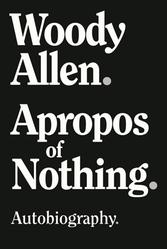
In the 10 years since the launch of Hot Books, Skyhorse has gravitated toward publishing another kind of "hot" book--books that other publishers either dropped or wouldn't touch, including Michael Cohen's Disloyal: A Memoir; Woody Allen's memoir, Apropos of Nothing; and Blake Bailey's Philip Roth: The Biography.
 But at least in 2026, Skyhorse may be best known in the industry for publishing titles by leading conservative figures including Robert F. Kennedy, Jr., Tucker Carlson, Alex Jones, and Steve Bannon.
For Lyons, the principles of free speech and anti-censorship underlie his publishing of such titles. It's also a matter of the company's "openness to ideas." Many of these titles simply wouldn't be published by other companies, as in the example of Allen's memoir, he says. Plus, many of the books at issue, particularly involving the pandemic and how to respond to it, raise "complicated questions that should be decided in the marketplace of ideas."
He points to The Real Anthony Fauci: Bill Gates, Big Pharma, and the Global War on Democracy and Public Health by Robert F. Kennedy, Jr., which was published in late 2021, at the height of the pandemic. It was, he reflects, "a book you couldn't buy in any bookstore in the country" because it was "labelled as misinformation." Lyons says the title may be "the most censored book of the decade," but laments that it "doesn't show up on any anti-censorship lists anywhere."
 Kennedy was personally attacked regularly, Lyons continues, and many of his publicity appearances focused more on "the censorship of [the book] than the content." Many bookstores refused even to special order the title. The New York Times rejected a full-page ad for the book. But it still did well in the markeplace. Lyons says the high number of Amazon sales were the result of other retailers banning the book.
Lyons emphasizes that the book includes more than 2,000 citations, mostly to peer-reviewed articles--and had blurbs from doctors, lawyers, and scientists. Five years later, the book has sold 1.4 million copies and continues to sell well.
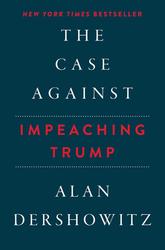 Lyons also argues that Skyhorse publishes books from across the political spectrum. For example, Skyhorse has published Gloria Steinem and Laurence Tribe, as well as books by Ralph Nader, including Let's Start the Revolution and Wrecking America: How Trump's Lawbreaking and Lies Betray All (with Mark Green). Before President Trump's first impeachment, Skyhorse simultaneously published The Case Against Impeaching Trump by Alan Dershowitz and The Case for Impeaching Trump by former Congresswoman Elizabeth Holtzman. And similarly in late 2020, Skyhorse published The Case for Masks: Science-Based Advice for Living During the Coronavirus Epidemic by Dr. Dean Hashimoto and The Case Against Masks: Ten Reasons Why Mask Use Should Be Limited by Dr. Judy Mikovits and Kent Heckenlively.
The key, Lyons says, is reading in a way that's open to different and new ideas. "Should you read to confirm all your biases or read to challenge yourself and make you question everything?" For him, the answer is easy, and among the best things that can happen from reading widely, he says, is to "change your life, make different decisions, quit your job, travel around the world."