Wednesday October 7, 2026: Maximum Shelf: Dragon of the Deep
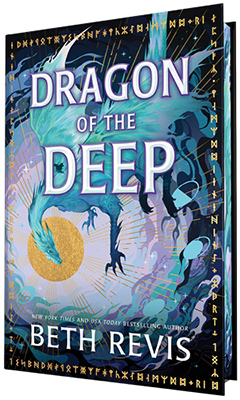
Dragon of the Deep
by Beth Revis
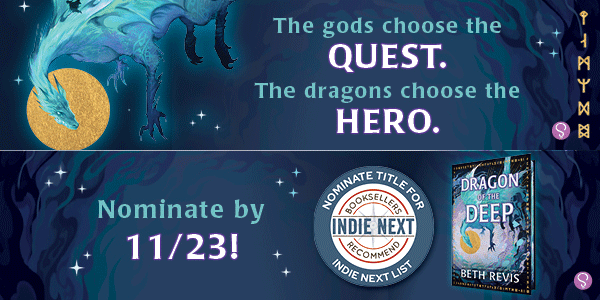
Beth Revis's Dragon of the Deep weaves a tale of high-seas adventure featuring ancient lore, dragons, a secret prince, a cursed girl desperate to escape her fate, and a will-they-won't-they love triangle built on nuance and complexity. The only thing that could make this epic fantasy even more appealing is a whimsically adorable tiny dragonling perched on the heroine's shoulder--and Dragon of the Deep has that, too.
Emelya's wayfinding mother parked her in a small cottage on tiny Fenrow Island before heading off on a long-shot money-making adventure across the seas--from which she never returned. Two years later, Emelya is still stuck in the "temporary" one-room house upon the island's cliff with only her pocket-sized dragonling, Poppy, for company. Poppy is tiny, bright red, no wider than three fingers, with delicate claws. She "never grew to size or power," but is cherished nonetheless--a much-needed companion for a young woman otherwise entirely alone in the world. The locals have shunned Emelya, having branded her as cursed: "The mother was cursed, and that's why her entire fleet sank. The daughter is cursed too, and any ship that bears her will be lost beneath the Silver Sea."
But Emelya is not one to let the curses of unkind neighbors--or anything else, for that matter--slow her down. When a longship comes dangerously close to crashing into the island's hidden rocks during a raging storm, Emelya acts to save the ship from certain doom, and herself from a miserable life stuck ashore. Aboard the boat, she lands at the mercy of Captain Ragnar, who is helming "a rich ship with a bare-bones crew." Emelya is no fool, recognizing that this means something secret or illicit is afoot, but she has little idea of what she's really gotten herself and Poppy into by getting off that island: a handsome captain and an even handsomer renegade prince's improbable quest to sail past epic sea monsters and magical powers in search of a mythical island. There Prince Erik plans to wrest control of the last of the colossal dragons hidden beneath the sea.
Revis is no stranger to epic worldbuilding, with YA fantasy hits like Across the Universe and several novels in the Star Wars franchise, including The Princess and the Scoundrel. That expertise is on full display in Dragon of the Deep. Here is a world steeped in and designed around dragons, in ways both practical and mythical. Fire and heat are not rarities in a world rife with dragonlings, tamed and kept as practical household pets. They warm the hearth, power the bakery, smelt metals at the blacksmith, and produce steam aboard Viking-inspired, steampunk-adjacent longships like Ragnar's. Their larger ancestors, believed by most to be long extinct, drive a collective memory and imagination grounded in stories of ancient heroes who tamed colossal dragons and brought an end to civil wars, uprisings, and dangers of the manmade variety. "Myths exist for a reason," Prince Erik explains to Emelya, "some to teach us, some to remember history, some to entertain, some to witness. The older a story is, the more it drifts from its origin, but that doesn't mean it wasn't created as a response to something true."
This deep-seated belief in the truth of myths drives Prince Erik. At once a kind and gentle man (and gentleman), he is also problematically fixated on his self-proclaimed destiny to tame a colossal dragon and he believes Emelya is the key to his ability to do so, no matter the cost. That nuance is bountiful in Revis's character development, keeping Dragon of the Deep from ever feeling juvenile; rich backstories weave together in these multifaceted characters and the ways they grapple with their lots in life. Never flat or unbelievable, they are instead flawed and driven and conflicted and challenged and hurt and trying, each in their own way, to understand their purposes, their destinies, and in some instances, their fates: "No path but the one we make; no choice but the one before us."
Action-packed, emotional, funny, and thoughtful, Revis's epic adventure is a bright start to a planned duology, the first in a pair of romantasy novels sure to appeal to readers of high fantasy and complex love stories alike. Hope "is a choice. One you have to make, over and over again.... You have to consciously choose to hope, and you have to remain conscious of how feeble that hope is and still continue to choose it. Anything else is darkness." Dragon of the Deep is both satisfying on its own and still sure to have fans lining to up to understand the choices this crew have made--and what hope that leaves for each of them and the dragon-powered world they call home--in book two. --Kerry McHugh
Sourcebooks Casablanca,
$31.99,
hardcover, 384p., 9781464241352,
January 26, 2027
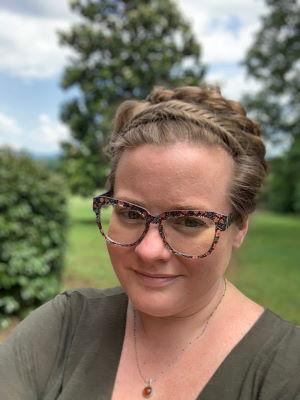
Beth Revis is the co-owner of Wordsmith Workshops and the author of several works of fantasy and science fiction, including the YA trilogy Across the Universe and several Star Wars novels. Her latest novel for adults, Dragon of the Deep (Sourcebooks Casablanca, January 26, 2027), weaves together dragon lore and seafaring mythologies in the first of a planned duology. Revis lives in rural North Carolina with her son, husband, dog, and cat.
Dragons! Ocean adventures! Myths! What sparked this novel for you?
I started with the Vikings and a fascination with Scandinavian folklore. And then the dragons came. It started off with this idea of a quest, the convergence of religion and magic, and the shifting from old gods to new gods, with the idea that there are monsters in the sea.
There's a sense in this novel that we've done the best we could with what we have. And then the circumstances change. And that doesn't mean that what we did before was wrong. It just means that now we're in a different context and we need to think about our decisions and ourselves differently.
That is a million percent what I was going for. My husband had a health crisis a few years ago, and there were so many instances where we were like, we don't know what choice to make. We would have to make the best choice that we could based on what we had. And then later, in hindsight, we realized that if we had made a different choice, things could have been so much better. But we didn't know that context. And we didn't know all those things that we have now in hindsight.
My favorite line in the whole book is "There's no path but the one you make." Because there is no right choice. You can only make a choice in the moment that you have with the information you have. Don't regret not knowing what you couldn't possibly have known.
But Prince Erik really sees himself as fated to one unchangeable path.
That's one of the things I really wanted to play with, and I'm so grateful that Sourcebooks let me include sections of his annotated books in the back of this novel. He has his handwritten notes on the side, and you can see these ancient texts that he's interpreting to fit his own narrative.
In a lot of ways, that's what fate ultimately does. It's just interpreting whatever you want it to actually be. What I'm trying to say in this story is that the really essential part of your fate is your choices. Eric is very unaware of that. He's a typical man. He believes that because he sees it, it must be true. Without thinking about how it's seen differently by other people.
Despite that, though, he's not a bad guy. How do you hold that kind of nuance in your character development?
I think it's easy to be good. It's easy to see a character who is a good person, who's trying to do the right thing. But when you have a character who's "bad," I try to make them have their own reasoning for it on every level.
Take the character of Astrid, for example. She doesn't like Emelya from the start. And she has multiple good reasons for not liking her and not wanting her on the voyage. And she's viciously cruel to her, just because she wants to be.
She also has a backstory, and when she explains a bit of where she came from, she realizes that she took something too far and she has to ask for forgiveness from this person that she loathes. Adding that layer was what cinched the character for me because I had to know why she would be the way she would be. Not just because she randomly hates this girl, but because she has a reason for becoming who she is, and that has influenced the way she sees other people.
To Astrid, Emelya is decidedly not the heroine of the story. I actually didn't want everyone to treat the main character as if she was the main character because she's not the main character of their stories.
I mean every person on Earth thinks they're the main character, but in reality, we're all just living this world together. So, yes, it's Emelya's story. But to all the other characters around her, she's just a side character who showed up halfway through their story, and they have to adapt around her. She's not that important to them; she has to prove that she's worthy of being in their story, just like I, as the author, have to prove that they're worthy of being in hers.
And worthy of being in Poppy's story too. Because we can't not talk about Poppy. The dragons in the world you've built are both big, epic, mythical power sources and also pets.
Poppy is the best. Absolutely.
For the dragon lore, I approach them in much the same way that we approach dogs in our society. Like, we have some that do very important jobs, like seeing-eye dogs. And then we have some that are just chihuahuas, there for the vibes. They only like their one person, and they're just there, and they're cute, and you can put them in your purse and take them with you. I started with that approach because I would love a world where dragons were as common as dogs.
But I also needed more sentient dragons and was playing with concepts of power, and what's more powerful than a colossal dragon? Combining the two was what made the book work for me. Having the colossal dragons on the other end of that spectrum, so different from pocket-sized Poppy, opens up the world to a bigger magic beyond just the fact that there's everyday dragons.
That also influenced a lot of how this world was made as well. Because if you have dragons, you have a natural heat source. Even a Viking-esque ship here is steam powered. You have a dragon, you have steam. Of course you would use it, it's a free resource. It's better than wind! There's a dragon at the bakery and one at the blacksmith. One in every home for hearth fires.
How did you settle on a duology?
I've been writing a few of them, and I had such a good time with them. You end the first book on the idea of, like, one story's done! But just kidding, because it actually shifted a little bit to the left, and now book two is exploring this other aspect of what's happened.
I really enjoy thinking about the repercussions of things. And that's one reason why I like writing than one narrative. In Dragon of the Deep,you get Emelya's point of view of something that's happened and then you immediately get Eric or Ragnar's, and you see they have a different perspective and a different interpretation of those events. I love writing that sort of dual narration, and I think that translates to writing a duology. You have the heroic events of book one. But then there's the fallout of those events, and the repercussions they have to deal with. You don't actually get a happily ever after when you win. You get your happily ever after--and whatever you build afterwards. --Kerry McHugh