

 |
|
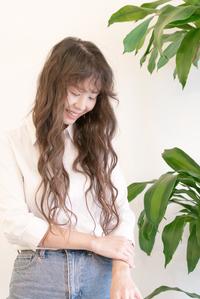
| Minyoung Kang (photo: Taehoon Kim) |
|
South Korean author Minyoung Kang is a writer and editor-in-chief of the film magazine CAST. Her publications include the novel Don’t Let Me Freeze Up and the essay collection Ride a Bicycle and Keep Going. She also publishes short stories on the popular Korean e-book platform RIDIBooks. Her novel Plant Lady (coming from Berkley on August 4, 2026) is about a serial murderer, yes, but most--if not all--readers will readily agree her targets are undoubtedly deserving of their gruesome fates.
Plant Lady, the novel, grew from a short story, in fact the first short story you'd written. What was the original inspiration?
At first, I simply thought it would be great to have a novel that contrasts green and red, plants and blood. Looking at quiet shops, I imagined what the scene would be like if a murder was happening inside but people walked by without knowing it, and that's how I wrote it.
Are you a plant lady--in that you keep and nurture plants? Are you as knowledgeable about plants as Yoohee seems to be?
I wanted to get close to plants, but I couldn't. Before writing this novel, I was a "plant killer" who kept killing plants. Around the time I started writing the novel, I made up my mind and brought in two plants, and they have been growing well until now. I acquired a certain level of information about plants when I started the novel.
I'm sure most women wish they had a Yoohee in their lives--a sad statement about society, as you mention in your afterword. Do you have less fatal advice for women who might seek your assistance about plants--and life?
When going through difficult times, I want them to think that they are not alone. Someone will definitely hold their hand, and that held hand will be passed on to another helping hand. If you have a problem that is difficult to solve yourself, actively ask for help around you. Someone will definitely respond.
Plant Lady has been out in Korea for a year now, and been quite successful. What were your expectations and hopes for the book as you were writing it?
To be honest, I never thought Plant Lady would be published worldwide like this. In Korea, there were many women who felt indignant, made resolves, and moved forward while reading this novel. I am looking forward to seeing what the reaction will be overseas. Rather than having certain expectations while writing the novel, I kept thinking about and working on a narrative flow perfectly filled with women's stories. There are many people thirsting for such novels and content, and I hoped Plant Lady would be the answer to that.
Do you have a general idea of who your Korean audience is? Gender? Age group? Background? What have been some of the most memorable responses?
I understand that women, especially readers in their 20s to 40s, make up the largest group. I don't know the detailed ages or backgrounds, but naturally, female readers are overwhelmingly the majority. The most memorable responses are probably those of readers comparing events in the novel to similar incidents that occur in reality. In particular, given the reality where men who abuse and kill animals are frequently released on probation, the ending of the "Corydalis" chapter was shared extensively across social media. The overwhelming reaction was that it was cathartic.
Readers of nine other languages will soon have access to the book. Do you think readers from different countries and cultures will react differently?
I think there will be reactions similar to those in Korea. Some might say it's too ruthless, while others might say it makes no sense. However, in reality, situations that make even less sense than in a novel often occur. Yoohee is a kind of fixer to resolve such incidents. At least among women, who were the main readers of this novel, I believe similar opinions will grow.
Your afterword mentions a man in your writing workshop interrupting with the question, "Hey, aren't the guys getting killed off for no reason?" Do you have an answer now for him?
I believe that if he is still writing, he would have realized it even without my answer. But if not, that's also his own burden to bear. This novel is fiction, a made-up story, but it also deals with crimes happening right at this moment. Women are simply overcoming them and moving forward. Because, in the end, this novel is a story about strong women. Those who don't understand this will probably just remain stuck where they are.
Your bio mentions that in addition to being a writer, you're also the editor-in-chief of the film magazine CAST. Your novel seems absolutely camera-ready. Did you imagine it being a film when you were writing?
I don't write with a film adaptation in mind, but I do try to work in a way that naturally brings cinematic scenes to mind for myself. I believe that's what makes it fun, highly immersive, and enjoyable for readers when they read it. Since I always imagine cinematic scenes when reading other novels, similarly, I write hoping that readers will do the same when they read my novel.
As the world sadly, aggravatingly, tragically, continues to fail women, someone like Yoohee seems more necessary than ever. Are you planning a sequel? Or better yet, a series?
By the time this interview is published, I will probably be in the middle of working on the sequel. As you said, there are so many places that need Yoohee, so I think Yoohee's story could continue to be serialized, whether it's through Yoohee or another woman. If a world comes where Yoohee is no longer needed, the world of Plant Lady will stop, and even I desperately hope for that, but since that realistically can't happen, the story is planned to continue. --Terry Hong