

 |
|
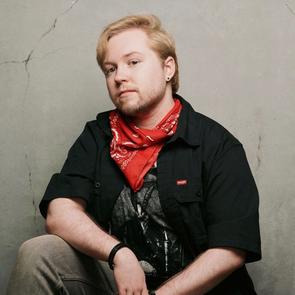
| Andrew Joseph White (photo: Arielle Lewis Studios) |
|
Andrew Joseph White is the author of the Printz Honor book Compound Fracture, the Stonewall Honor book The Spirit Bares Its Teeth, and the William C. Morris Debut Award finalist Hell Followed with Us. White, who received his M.F.A. in creative writing from George Mason University, is transgender and autistic. He lives with his wife in Virginia. You're No Better (Peachtree Teen, October 20, 2026) is a YA horror novel about Morgan, an autistic trans teen desperate to distinguish himself from his imprisoned serial killer father. Here, White talks with Shelf Awareness about representing varied trans identities, writing for teens and adults, and crafting angry, vicious characters who are still loved.
In the acknowledgements, you state that you and Morgan are "vastly different people." Was it challenging to write a character who's so unlike you?
Morgan had such a shockingly inhabitable mindset and voice that it almost startled me. It wasn't challenging at all. Though to be fair, he and I share some building blocks. We are both transgender and autistic. We struggle with human interaction and reciprocation in relationships, and we hide our social deficits behind a savvy mask. But I spent my teenage years as a sensitive, conflict-avoidant overachiever, and that wasn't the character You're No Better needed. I knew Morgan had to be abrasive, and explosive, and extremely stubborn--the exact opposite of teenage me in so many ways.
What helped most was pinpointing Morgan's specific struggles with emotional development and letting that guide his voice. Every second of the day he feels debilitating shame and anger, and other emotions are practically inaccessible; after all, he was never given a chance to grow beyond fight-or-flight. Once I figured that out and infused it into his words, his narrative style absolutely flowed.
In many YA books featuring trans characters, the character's gender is closely tied to and illustrated by their gender expression. In You're No Better, Morgan is forced to remain closeted. Is it important to you to represent varied trans identities?
Absolutely. The time between realizing I was trans and being able to do anything about it was extremely difficult... and I didn't realize I was trans until I was an adult. My main readership, the reason I write YA books in the first place, is made up of teenagers. Of children. And these children live their lives at the mercy of parents, guardians, and all kinds of adult gatekeepers (doctors, politicians, societies) that may be standing between them and whatever gender-affirming care they need to be themselves. The majority of my YA protagonists, including Morgan, find themselves in a similar situation. They may not have access to information, or health care, or safe adults, because that is the reality of many of my young readers.
I have lots of respect for trans authors who write trans characters in YA who do have access to those things. It's important to have representation of what an accepting world can look like, and some kids in Morgan's situation find solace in escapism. But others are looking for a vicious kind of catharsis--they want to say, "Yes, you understand how painful this is"--and that's what my work is here for.
You're No Better follows your adult title, You Weren't Meant to Be Human. Is there a conscious shift you undergo to get back into a mindset of writing YA after writing for an adult audience?
When I'm writing for teens, I carry a moral obligation toward the young person interacting with my art. I'm speaking to a child, which means there is a duty of care: they are still learning about the world, and it is the job of adults to offer guidance and advice. Even if my books are rough, and the content-warning lists are long, I'm writing this book to offer solace and catharsis to teens like the one I once was and to provide a safe place to work through tough feelings.
When I'm writing for adults, the existence of that moral obligation is iffy at best. I'm not obligated to offer guidance or advice or an important insight into the world. Sure, I can if I want, but maybe I want to clack my characters together like Barbies. Maybe I feel bad about something, and I want you to feel bad too. Maybe I just want to hit you very hard with a brick. Whatever. We're all grown-ups here.
You're No Better is a work of horror, while it also features common YA themes. How do you balance the more relatable aspects of growing up (building and losing friendships) with Morgan's experience being the child of a notorious serial killer?
One of the things I really wanted to do in You're No Better was show how difficult things (be it disabilities like autism or being the child of a serial killer) can impact day-to-day life. You don't leave challenges behind if you're doing "normal teen stuff." Stereotypical experiences, like arguing with classmates or butting heads with parents, will be wildly impacted if you struggle with emotional regulation, or if you instinctively interpret people as threats.
When you're young, and things are hard, the world keeps turning. You still have to go to school. You still have to interact with people, some of whom are your friends, no matter how hard it is or how much it sucks. In a book about the aftermath of extreme human cruelty, it didn't seem honest to ignore those parts of life.
You dedicated this book to "the angry kids." Do you think readers might see themselves in the pages of your book?
I think there are a lot of young readers who will see themselves in Morgan's desperation to escape others' perceptions of him. He is trapped by several adults who are trying so hard to make him into what they want, be that a villain or a daughter, and it's turned him vicious, like an animal backed into a corner. I know there are a lot of trans teenagers out there who are dealing with that same animal-in-a-corner feeling, especially now. And maybe my older readers, too! I'm still dealing with it, and I'll be 28 when You're No Better releases.
What I want those readers to see, though, is that yes, Morgan is vicious. He is mean, makes a lot of bad decisions, and his desperation has consequences for himself and those around him. But he is still cared for. By the end of the book, he has met people who understand him and adults who are able to help. That's the most important part of all.
What can you tell us about your next project?
At time of writing, I'm drafting Beast//Warden, a YA fantasy horror set in another world's Stone Age. It's a complicated puzzle of a book, but it's been a wonderful challenge so far. After years of listening to trans and disabled people be dismissed as statistical (and dangerous) anomalies of the modern era, it's invigorating to write a book that insists we've been around since prehistory. --Kieran Slattery