

 |
|
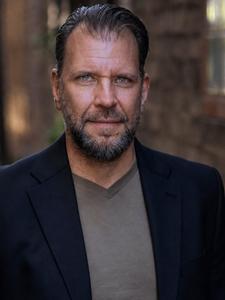
| Carter Wilson (Elke Hope Photography) |
|
Carter Wilson is known for domestic and psychological thrillers, including Final Crossing, The Boy in the Woods, Mister Tender's Girl, and Tell Me What You Did. He is the creator and host of the podcast Making It Up, and the founder of Unbound Writer, where he works with writers through coaching, retreats, and online classes. Wilson was born in New Mexico, grew up in Los Angeles, and attended Cornell University in Ithaca, N.Y. He lives with his family in Erie, Colo. His 11th novel, When They Find Me, is a tense, electric thriller featuring random accidents, family bonds, and the legacies of old wounds, set in snowbound rural Colorado. It will be published by Poisoned Pen Press on November 10, 2026.
What's different about writing your 11th book from your first one?
Not much. It gets easier in terms of the physicality of writing, just constructing sentences. My first novel was like hand-to-hand combat. Now, if I know what I'm doing in terms of a scene, it just flows. I produce faster.
The struggles are the beauty. I don't outline, so I have no idea where the story is going, and so in every book I have the same pain point: Is this any good? Is there an ending here? Does this make sense? But the flip side of that is I get to sit down every day and say, what happens? And I get to find out. I can't imagine ever not doing that.
Over time, you develop a sense of story that just soaks into your subconscious. I'll have a sense that nobody's moving around enough, we need action, or we need an emotional break, or a pause. When you first start out, all you have is the experience of reading other people's books. Once you write enough, you have a sense of your own cadence and rhythm, and it continuously evolves, and that's kind of beautiful too. Your voice changes.
Is it difficult to switch between two voices?
That's a real challenge. I don't do it a lot; most of my books are single point of view, first-person present tense, and this one is a dual POV, with each having more or less equal weight. Having them sound distinct is really tough. I asked Tess Gerritson this same question and she said she considers their economic background. That's really interesting. In the case of this book, one of the voices is fairly uneducated, young, home-schooled, and I think I was able to adopt a sound from that.
There's a trap that thriller writers, including myself, get into. First-person present tense is so interior, it's so immediate, that you can go down a path where you're inside somebody's head without them actually doing anything for a long time. It becomes a shortcut to reveal backstory or intention. That's my first draft. Next draft, I cut a lot of that out--how do I show this in an interesting way? The beauty and the work are all in the editing.
Are there special challenges in writing from darkness?
I usually don't write from the antagonist's point of view. Typically it's the protagonist, and their inference and their filtering of their relationship with the antagonist. I write from a place of their fear, and that allows me to get into their head and imagine, what would I do in this situation? What would I feel? I think the hardest part of writing an antagonist is not sounding cartoony about it, and making sure there is a real reason, even if it's in their own head, that they're doing what they're doing. It's kind of Villains 101, right? They have to believe in their own story, and it can't be too outlandish. It has to be based on something where you can say, I could see someone getting to a point where this could happen. Including myself.
I've evolved over time. My early books were more horror-leaning. Now it's like, what if this happened? It doesn't have to be too crazy to be really scary. If I'm feeling empathy, however that's defined, the reader will be too. If I get scared, then maybe that will happen to the reader too.
How do you choose the protagonist or narrator of a story?
This draft always had two narrators, but it totally changed in my edits. That second voice changed to a totally different character. It depends on the story. With The Father She Went to Find, I just had this person in my head. For probably six months, I didn't write anything down, just--who is this person? There are other books that might be inspired by a news article I read, so the character tends to be inspired by the person in that article. The last story, I didn't know who the person was, I just knew they were really angry. It all depends. I tend to alternate between female and male points of view, so it depends on what I've done lately as well.
What are the strengths of the locked-room format?
It scared the hell out of me. I didn't know where the story was going to go. The entirety of the book takes place over five hours, and about halfway through I was like, do I have enough here? But I've always loved small casts and huge consequences, rather than vast global conspiracies. The advantages are that you really get to explore each of these characters in a heightened emotional state. It let me get deeper into their psychology.
What do you feel the images contribute?
There's multimedia in a lot of my books. I do it to amuse myself. I'm a very visual person, so sometimes I just want to see what a scene looks like. I wanted to see what it looked like as if I was directing this as a movie. I had them hire an artist to sketch this out, as I would a storyboard. There's not a lot of intentionality about it, but I hope the readers see what they want to see in it. Sometimes you don't want to reveal too much of how you see it, because you want the reader to put it all together themselves. But that's the beauty of the storyboard: it's just really rough.
What are you working on next?
I just turned in my next book, for publication roughly August 2027. I'll tell you the setup, because it really happened. My mother, who's in her 80s, about five years ago, handed me this business card. She said, when I die, call this number. What the hell? As it turns out, she's made all her postmortem arrangements, which is very thoughtful and considerate and beautiful. And I was telling that story to a group of friends and one said, what if you called that number and three black Escalades just whisked up to your house? That's a story! So, it's a story about a son who scans this barcode after his mother kills herself unexpectedly, and what it unleashes and how little he actually knew of her at all.
I'm a little afraid, because my mom is very convinced that you write what you know. I'm going to have to really convince her that, beside the setup, this is not you. --Julia Kastner