

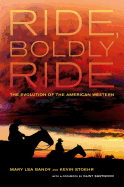
In his foreword to Ride, Boldly Ride, Clint Eastwood tells us the "public's recognition of the Western movie as a genuine art form was a long time coming." This is the paradox at the heart of this fascinating book: How could our most popular film genre take so long to get the respect it deserved? Thanks to Mary Lea Bandy and Kevin Stoehr, we now have a clear and thorough explanation.
It was D.W. Griffith, they explain, who "helped to establish the western film as a specific form of visual and narrative art." Subsequent movies further shaped the Western's defining themes: the "Westerner" himself, his weapon, survival on his own terms, the land (especially water) and the importance of law and order.
Bandy and Stoehr touch upon many of the genre's greatest icons, including Red River ("one of the most enduring of westerns"), The Searchers ("now considered one of America's greatest films") and the "brilliant and bloody" The Wild Bunch. There's a whole chapter on Eastwood's contributions to the genre, as both an actor and a director, focusing on The Unforgiven. Even the postmodern era is represented by films like No Country for Old Men, There Will Be Blood and Cowboys and Aliens, all with their "self-conscious response to a wide-ranging era of western films." As the credits roll, we are reminded that the Western's "clearest expression of journey, adventure, and expansionism has been the journey, adventure, and expansionism of the genre itself." --Tom Lavoie, former publisher