

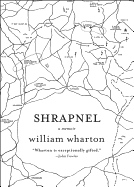
In his novels, William Wharton (1925-2008) often wrote about the shattering effects of war. His protagonists in Birdy and A Midnight Clear dealt with the violence, absurdity and randomness of war with varying degrees of success, always through a distancing veil of fiction. Shrapnel, a memoir of his World War II experiences, is a document of the actual events--some humorous, some harrowing--that inspired his classic novels.
Shrapnel describes in exacting detail the litany of absurdities a wartime grunt endures before being sent into combat, as Wharton endures the strain of mind-numbing repetition and the moronic orders of martinet commanders. When he finally sees fighting, the randomness of who survives and who dies leaves a deep impression. The cool, unemotional narrative makes the instances of violence more real and the black humor more aching.
Wharton proves his competence in combat, but lacks the butt-kissing instinct for sustained success in uniform. His various, low-level rebellions to protest the constant stupidities will remind many of Catch-22. One event, recounted with clinical detachment, encapsulates and underscores the wound war left on Wharton's psyche; as innocent soldiers die around him, the realization dawns that something important has also died inside the survivors.
The emotionally charged Shrapnel is a worthy addition to World War II literature and a well-crafted capstone to Wharton's literary career. --Donald Powell, freelance writer