

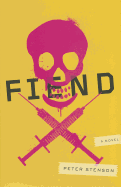
Rarely are the survivors in apocalyptic fiction as frightening the monsters they face. In the case of Peter Stenson's Fiend, however, the protagonists are perhaps even more repulsive than the zombies that have overrun the world. Chase Daniels emerges from a meth binge to find a little girl disemboweling a Rottweiler with her teeth outside his friend's house. Chase, along with fellow speed junkie Typewriter, can't be sure if this horrifying spectacle is real or the product of their drug-addled minds--until the bloodied girl crashes through the window and a heavy door, laughing as she attacks. Chase and Typewriter escape into a world plagued by the walking, cackling dead, called Chucks, and a scattered handful of survivors with one thing in common: they are all addicted to methamphetamine.
Stenson's first-person, present-tense narrative, with a writing style evoking Cormac McCarthy, propels Fiend at a dizzying pace. Stenson's depictions of zombie apocalypse violence and acute drug addiction are graphic, and the stomach-churning miseries will turn off some readers. Others will become ensnared in a tale far deeper than most zombie fare, in which the antihero's inner demons are fiercer than the monsters attacking him. Despite his long history of failure and disappointment, Chase may finally redeem himself by saving his last friend and a lost love. This satisfying love story quickly becomes the novel's emotional core, leading to an ending as inescapable as it is traumatic. --Tobias Mutter, freelance reviewer