

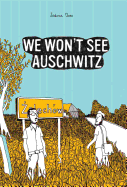
In We Won't See Auschwitz, first-time author Jérémie Dres has created a gorgeous work of graphic nonfiction, recounting the search for his Jewish-Polish roots. One year after the death of his grandmother, Dres and his brother, Martin, embark on a week-long trip to Poland, with warnings from Parisian relatives about relationships with Poles, complicated by lingering anti-Semitism. Dres's first encounters in Warsaw bear out this observation, while interviews with assimilated Jews provide a deeper perspective on Judaism in post-World War II Poland, a slow-melting frost that Dres impersonally depicts in stark black-and-white poetic images.
Their emotions change when the brothers visit a Warsaw cemetery to view the graves of their great-grandparents. A trip to the ancestral shtetl in Żelechów reveals more neglect, fostering anger and resentment. Yet Dres finds glimmers of hope that spark optimism for Judaism's rebirth in Poland, including a Kraków festival that honors and embraces the nation's Jewish history, and the joyous sound of old Jewish music unfolding in dreamy, revelatory layers in a Kraków synagogue. "Our family had a narrow view of things," Martin remarks. 'What we just heard shines a spotlight on everything we didn't know. It's like tripping over a mound of dirt to find it swarming with ants."
Dres sees no point in visiting Auschwitz and its sad Holocaust past when he and his siblings are heirs to a rich pre- and postwar legacy. His story is one that should resonate with the many Americans who have rediscovered and seek to embrace Jewish roots beyond their grandparents' suffering. --Nancy Powell, freelance writer and technical consultant