

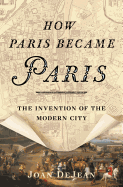
The 19th-century civic planner Baron Haussman is often given credit for transforming Paris into a modern city through a massive rebuilding project of bridges, wide boulevards and public spaces. But Joan DeJean argues, in How Paris Became Paris, that the real transformation occurred two centuries earlier, when Henri IV set out to rebuild a city ravaged by 36 years of conflict between Catholics and Protestants during the Wars of Religion. In 1597, wolves roamed freely in the French capital; by 1700, Paris was synonymous with culture, glamour and fashion.
Beginning with the building of the Pont Neuf (literally "the New Bridge"), DeJean (The Age of Comfort) tells the story of a century of royal vision, private funding, innovative real estate development and public planning. She also looks at how physical changes to the city created new behaviors, new institutions and new problems. Many of the things we think of as typically urban first appeared at this time, from public transportation and sidewalks to traffic jams and tourists (not the same thing as pilgrims). Other changes are less familiar: creating public spaces in which to promenade led to the new crime of cloak-snatching.
DeJean is also concerned with more than just 17th-century urban renewal. Using a range of sources including contemporary guidebooks, plays and travel accounts, she explores how the city's image was reinvented--creating a fantasy of Paris as what Claude Monet would later describe as "that dizzying place." --Pamela Toler, blogging at History in the Margins