

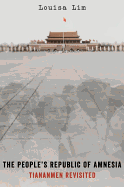
On the morning of June 4, 1989, the People's Liberation Army opened fire on unarmed protesters in Tiananmen Square in Beijing, killing hundreds or even thousands of students and civilians. The Chinese government kept the truth hidden from public view, but NPR correspondent Louisa Lim was able to conduct her own investigation, interviewing insiders who directly witnessed or participated in the atrocities.
Lim's subjects include a soldier who, haunted by the events of June 4, now produces artwork that reflects his pain; a former top-ranking official whose sympathies for the students cost him his career and freedom; and student activists--an exile in Taiwan and a man who served three prison sentences for his decision to participate. She narrates the story of the Tiananmen Mothers, a grassroots political organization that demands government accountability for the deaths, despite threats of imprisonment. Finally, Lim offers little-known details about the violent student protests that took place in the interior city of Chengdu during the same time period.
Lim delivers a critical assessment of the massacre, demonstrating that the Party's promotion of economic dominance and "Technique of Forgetting History" have led to a moral crossroads, made more dangerous by shifts in the global economy. "When lies are taught in schools, passed unchallenged from one generation to the next, and truth-telling is punished, a moral vacuum gapes ever larger," writes Lim. "The debt grows greater, and the cost paid is the dearest of all: a loss of humanity." --Nancy Powell, freelance writer and technical consultant