

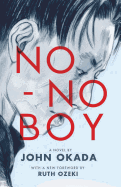
At the time it was published, John Okada's 1957 novel about the postwar experiences of Seattle's Japanese-American internees who refused to swear loyalty to the U.S. and serve in the American military (thus, responding "no-no" on a government questionnaire) was met with resistance from a public eager to forget. This new reprint, with a new foreword by Ruth Ozeki, brings Okada's groundbreaking work to a new generation.
In No-No Boy, Ichiro Yamada returns home after serving two years in prison for being a no-no boy. Full of loathing and shame, he resents his ethnicity and his parents--a prideful mother who believes Japan won the war and an alcoholic father--while envying the internees who served and now enjoy the American lifestyle of which he feels denied. His brother hates him, and his former friends mock, abuse and spit upon him for his actions. Kenji, a fellow university student before the war, befriends the reluctant antihero; Ichiro yearns to feel the pain of the maimed and dying veteran who "can put [his] one good foot in the dirt of America and know that the wet coolness of it is [his] beyond a single doubt." They talk on a drive out to the country and spend the night with Kenji's empathetic friend Emi, an internee abandoned by her enlisted husband. Together the three forge a friendship that promises the beginnings of hope and self-forgiveness.
Okada, an internee and enlisted man himself, wrote in a raw, brutal stream of consciousness that echoes the pain and intergenerational conflict faced by those struggling to reconcile their heritage to the concept of an American dream. --Nancy Powell, freelance writer and technical consultant