

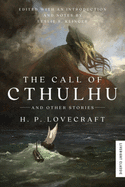
The Call of Cthulhu collects 10 of early 20th-century horror master H.P. Lovecraft's most indelible short stories, including the still-terrifying title story, along with annotations provided by editor Leslie S. Klinger. The book is essentially a slimmed-down, more accessible version of the gargantuan The New Annotated H.P. Lovecraft: Beyond Arkham, also edited by Klinger, and serves as a better introduction for readers new to the author. The collection takes a diverse sampling of Lovecraft's works, including pieces that hew to science fiction ("The Colour Out of Space") and gothic horror ("The Rats in the Walls"), while some build upon his famous Cthulhu mythos ("Dagon," among others). Lovecraft's stories remain as harrowing and strange as they ever were, and their enduring influence makes them essential reads for horror fans.
Klinger's annotations provide valuable context about Lovecraft's influences and the time in which he wrote, but they are perhaps most fascinating in their focus on the recurring themes found in his work. Despite creating bizarre new mythologies, Lovecraft's writing was in many ways deeply personal. His obsession with and fear of madness is easily traceable to the fates of his parents--both were admitted to mental hospitals--and his fear of otherness is undeniably tied to his racist convictions. Klinger's annotations help to identify and track these thoughts, sometimes referencing Lovecraft's own notes and letters in helping readers unravel the author's complicated web of preoccupations. What emerges, alongside 10 excellent short stories, is a fuller understanding of Lovecraft's disturbing belief that humanity is an insignificant species when measured against the ancient, malign universe. --Hank Stephenson, the Sun magazine, manuscript reader