

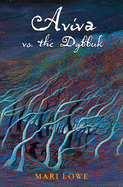
A lonely 11-year-old grieves her murdered father, protects her fragile mother and heals an estranged friendship, all while vexed by a mischievous ghost, in Mari Lowe's stirring and suspenseful debut, Aviva vs. the Dybbuk.
Aviva's existence divides into before and after the "accident" that took her father's life. Before, Aviva's father was the shammas, or caretaker, for their shul (synagogue). Before, Aviva was best friends and neighbors with Kayla. Before, Aviva's Ema was a popular morah (teacher); before, Ema at least left the house. Aviva and Ema now live at the mikvah where Ema works as the attendant. A meddlesome and sometimes dangerous dybbuk, or restless ghost, "came with" the purifying pool used for religious immersion and has been Aviva's constant, haunting companion ever since. Now, Aviva and Kayla are reconciling their distanced relationship while planning their sixth grade's Bas Mitzvah Bash, but the dybbuk threatens the girls and their progress. Meanwhile, a series of antisemitic hate crimes at the shul rekindles the trauma surrounding Abba's death.
Lowe offers a fresh and carefully plotted ghost story exploring melancholic themes and their mental health ramifications. While probing weighty topics, Lowe celebrates the resilient strength of community, in particular the "joy... [of a] circle of Jewish women.... A group united... regardless of our ages and our experiences." Religion seamlessly suffuses the story, including passing references to a kosher kitchen and the halacha (Jewish religious laws) regarding gendered public dancing, but Lowe steers clear of dogmatism. Orthodox Jewish readers should be delighted by the everydayness of this representation; others will likely appreciate the included glossary. A deliberate and engrossing story about loss, grief and the healing power of belief. --Kit Ballenger, youth librarian, Help Your Shelf