

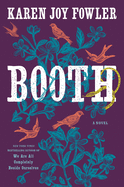
One could write an old-fashioned horror novel, but an even better way to terrify modern readers is to show them the parallels between a gut-wrenching period of American history and today, as Karen Joy Fowler does in Booth. In this canny and disturbing piece of historical fiction, she creates a portrait not just of a killer but also of the killer's family. Readers meet the large Booth family--Junius, the father and a Shakespearean actor on tour more than at his home near Baltimore; his wife, Mary; and their 10 children, only six of whom live beyond childhood. Among them are Rosalie ("Nothing is expected of her"); "artistic, sensitive, and maybe a touch eccentric" Edwin, who becomes a celebrated stage actor; tomboy Asia; and John, who is neither the actor nor the staunch abolitionist his brother is and who believes that "nothing will destroy the American black faster than freedom."
Interspersed among scenes of the Booth family, Fowler (We Are All Completely Beside Ourselves) charts the career of Abraham Lincoln, starting with his 1838 speech in which he responds to the lynching of a free Black man in St. Louis. In describing the warnings in Lincoln's speech, Fowler's words read as chillingly apt today: "The gravest peril will come if the mob and the dictator unite." That's what makes Booth so unsettling and thrilling: the many parallels between the Booth family's era and the present day. "What is it like to love the most hated man in the country?" Fowler asks. It is a grim reminder that, throughout history, families of murderers have had to discover the answer, and more are likely to follow. --Michael Magras, freelance book reviewer