

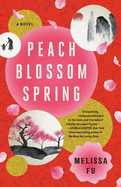
Debut novelist Melissa Fu draws on her family's history to create a captivating story of immigration, family secrets and deep love in Peach Blossom Spring. Fu begins her narrative in 1938, as the Japanese army continues to advance in China. Meilin, a young mother working in her father-in-law's antiques shop, is forced to flee to the countryside with her young son, Renshu, and her husband's family. Hidden in Meilin's luggage is an elaborate hand scroll featuring vividly drawn scenes from myth and history. The scroll and its stories bring comfort to Meilin and Renshu as they travel through often dangerous conditions, searching for safety. Eventually settling in Taiwan, the two build a new life for themselves, though it is marked by grief and always shadowed by the possibility of further upheaval.
Diligent and serious-minded, Renshu does well in his studies, eventually earning a place at a university in the U.S. Fu chronicles Renshu's adjustment to life in a new land, his reinvention of himself as Henry Dao, a Cold War-era physicist with an American wife, raising their daughter, Lily. When Lily starts asking questions about her Chinese heritage, Henry finds himself reluctant to answer her queries, even angered by them. Meanwhile, Meilin has lived quietly for many years in Taiwan, making the long journey to spend a summer with Henry and his family only once.
Fu writes sensitively about the concerns of multiple generations of immigrant families. Richly described, with deeply compassionate protagonists, Peach Blossom Spring is a haunting tribute to immigrant families and a gorgeous meditation on how stories can shape identity. --Katie Noah Gibson, blogger at Cakes, Tea and Dreams