

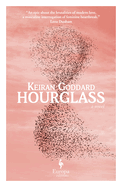
Even readers who don't know that the British writer Keiran Goddard is a poet will suspect as much from the lyricism of Hourglass, his debut novel. This slender work presents three periods in the life of a young man so distraught that he writes: "The year you arrived I had been shrinking myself." The person he writes this to is the woman with whom he becomes romantically involved. Readers experience this romance through the novel's three sections: the relationship's inception, when the unnamed woman buys one of the unnamed narrator's essays for her magazine and asks to meet him; three years later, during their relationship; and five years after their breakup, when the still-grieving narrator writes, "I do not know where you are."
Each section contains short chapters of a page or two of terse paragraphs, a structure that may remind some readers of the stories of Lydia Davis. At one point, the narrator writes that his girlfriend is "not the most beautiful person I have ever seen. The most beautiful thing. Which is a much bigger category. And I cannot turn away." In these more poetic moments, the novel echoes the rhythm and sentiments of Pablo Neruda's love poems. Goddard's narrator writes movingly of his emotionally fragile mother, his complicated relationship with faith and other factors that define his life. "You have to live," he says. "What else is there to do with a life?" Hourglass is an elegant testament to the difficulty of figuring out how to do that. --Michael Magras, freelance book reviewer