

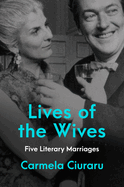
Even a generally rosy marriage has its thorns; "Toss in male privilege, ruthless ambition, narcissism, misogyny, infidelity, alcoholism, and a mood disorder or two," writes Carmela Ciuraru in Lives of the Wives, "and it's easy to understand why the marriages of so many famous writers have been stormy, short-lived, and mutually destructive." Lives of the Wives offers scintillating, no-prisoners-taking portraits of five such marriages.
Ciuraru (Nom de Plume) includes among her subjects--all of whom reached adulthood in the early to mid-20th century--the same-sex partners Radclyffe Hall, a writer, and Una Troubridge, a sculptor and translator. Being gay didn't stop them from following a sexist script: the masculine half, Hall, left domestic matters to the other partner--to the detriment of Troubridge's career. The Italian novelists Elsa Morante and Alberto Moravia may have never legally divorced, but their respective successes corresponded with the erosion of their marriage. Writer Elaine Dundy and critic Kenneth Tynan were another pair of incompatible writers, but, to readers' certain relief, they do ultimately divorce. Novelist Elizabeth Jane Howard also doted on a writer spouse, Kingsley Amis--and eventually came to the realization that "she had not only put herself at a crippling disadvantage as a writer, but lost the interest of her husband." Rounding out the trio of overdependent men is children's literature's Roald Dahl, who bore an appalling grudge against his movie star wife Patricia Neal's artistic hunger.
Part cautionary tale and occasional horror show, Lives of the Wives is fundamentally a shimmering love story--that is, a story of love for the creative life, if not always for the person doing the creating. --Nell Beram, author and freelance writer