

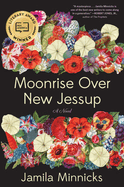
Teenage orphan Alice Young, fleeing an abusive landlord, buys the only bus ticket she can afford in 1957. Her stop in Birmingham, Ala., presents a wondrous sight: "Up and down the avenue, Negroes of every shade came together like the dusk in a fall forest." And there she stays. In Moonrise over New Jessup, Jamila Minnicks's lyrical debut, Alice narrates her arrival in a town "born of the swamp, from days of tribulation" up to her years as an integral member of a community on the cusp of change.
Minnicks's novel, winner of the 2021 PEN/Bellwether Prize for Socially Engaged Fiction, provides an unusual perspective on the civil rights movement. New Jessup was founded in 1904 by and for "all community-minded Colored people." In 1957, the city's "old heads" are incensed by ripples of brewing discontent. Alice, who marvels at the "air-breathing ease with which Negroes went about their day," cannot imagine conflict. But she's immersed in a clash of ideologies when she falls in love with Raymond and learns he's a leader of the National Negro Advancement Society, working for voting rights and, instead of integration, municipality status for New Jessup. Alice recalls "breathing all the blackdamp of hatefulness" during her life and resists the organization's plans for confrontation--but eventually offers support to her husband and "this town and its folks where I had thrived." Tensions rise due to discord within the movement and violence from outside, but Minnicks's New Jessup is a close-knit community destined to prosper. The first-person narration, with its authentic regional dialect, infuses this novel with fresh appreciation for those who struggled for racial equality. --Cheryl McKeon, Book House of Stuyvesant Plaza, Albany, N.Y.