

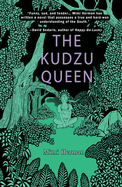
It's the spring of 1941 when smooth-talking James Cullowee, the self-proclaimed Kudzu King, glides into Pinesboro, N.C., in his shiny green truck, touting the "miracle crop" of kudzu to the farmers of Cooper County. "Everything you touch will turn to green," he claims. The adults skeptically consider their free sprigs of the vine. But the teenage girls in the crowd are smitten, including Mattie Lee Watson. In The Kudzu Queen by Mimi Herman (A Field Guide to Human Emotions), 15-year-old Mattie is an endearing narrator who highlights the region's lush nature and culture, but eventually the novel reveals complexities of power, sexuality and racism in the South just before the U.S. entry into World War II.
Cullowee's promise, like kudzu itself, conceals an invasive tenacity. With news of a government subsidy for planting the vine and grand plans for a June festival, including a Kudzu Queen competition, Cullowee dazzles Pinesboro's leaders. Kudzu Queen etiquette classes captivate Mattie, whose infatuation with "the King" awakens unfamiliar feelings. When he walks with her, she marvels that "down below, a part of me that I generally ignored seemed lit up in neon." Mattie, refreshingly wholesome, longs to be crowned but doesn't abandon her values, fretting that her two best friends are excluded: Rose, who is Black, and Lynnette, busy supporting her family and their "hard luck farm." While her brothers embrace kudzu cultivation, savvy Mattie uncovers Cullowee's self-serving motives and craftily plots a climactic comeuppance. The Kudzu Queen, tinged with dark truths, is nevertheless a delightful novel narrated in regional dialect and filled with detailed descriptions of summertime in a Southern farming community. --Cheryl McKeon, Book House of Stuyvesant Plaza, Albany, N.Y.