

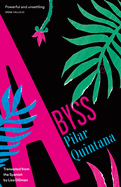
Chasms, both within the earth and between people, can be hard to bridge, as Pilar Quintana (The Bitch) reinforces in Abyss, her mesmerizing novel translated from the Spanish by Lisa Dillman. Claudia, who narrates, recalls the year she was eight. It's the early 1980s and Claudia lives in a Cali, Colombia, apartment that contains so many plants ("we called it the jungle") that butterflies often flutter in from outside. Her father, Jorge, manages the supermarket he and his sister Amelia inherited and can be so uncommunicative that he doesn't speak to Claudia when they visit the zoo. Her Mamá, also named Claudia, is two decades younger than Jorge and spends her days reading gossip magazines, which, at the time of the story, feature salacious reports of famous young women who have recently died, including Natalie Wood, Grace Kelly and Karen Carpenter. Their deaths, Mamá tells Claudia, were their way of escaping the men in their lives.
Quintana vividly dramatizes Mamá's disenchantment and its effects on Claudia. Mamá's discontent deepens when Amelia goes on holiday in Madrid and brings home Gonzalo, her new husband, more than 20 years her junior. Soon after, Jorge discovers that Claudia's mother and Gonzalo have begun an affair, and the narrative shifts: Jorge's colleague Doña Imelda "followed us with her eyes in a way I understood only later." Quintana introduces other complications: a family member who commits suicide, the story of a woman who disappeared years earlier and young Claudia's worry that she faces the same fate as they will. A couple of plot twists hinge on coincidences, but Abyss is otherwise a riveting story of regret, opportunities squandered and the fear that family misfortunes will persist through generations. --Michael Magras, freelance book reviewer