

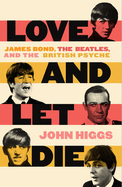
Yes, the world needs another Beatles book, especially one as topping as Love and Let Die: James Bond, the Beatles, and the British Psyche. In it, John Higgs (William Blake vs. the World) compares post-Empire Britain's two most enduringly loved cultural institutions, arguing that "England is such an integral part of both Bond and the Beatles that they have both shaped how the country is seen in the eyes of the world." To make his case, Higgs wears at least eight different hats: music critic, film critic, historian, scholar, psychologist, philosopher, biographer and, because he's no foe of fun, gossip.
October 5, 1962, saw the release of both Dr. No, the first James Bond film, and "Love Me Do," the Beatles' first single, marking the last time Bond and the band were in sync. The Secret Service agent was created by the well-born Ian Fleming to represent the English establishment, whereas the Fab Four were all about forging new paths. As Higgs puts it: "Prior to the Beatles, adopting the voice, attitudes and social signals of the upper classes was seen as a necessary way to advance in British society." The Beatles upended that, but Bond, like the band, still beguiles the world.
Among the delights of Love and Let Die are the connections that Higgs examines between the Beatles and 007. In one of many winning observations, he writes that "Live and Let Die"--the James Bond theme song written by post-Beatles Paul McCartney--is "surely the most unMcCartney-ish sentiment you can imagine." --Nell Beram, author and freelance writer