

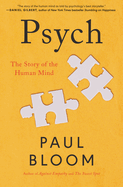
Psych is based on the Introduction to Psychology course that Paul Bloom (Against Empathy; The Sweet Spot) has taught for many years at Yale University. In a book he says can be read from cover to cover (his recommended approach) or for his insights into specific topics, Bloom begins with the anatomy of the brain and the insights of neuroscience, and moves on from there in a comprehensive survey that touches upon subjects that include the problem of consciousness, language, emotions, social behavior and much more. He displays an impressive familiarity with the principles and key research of each field, while writing in an enthusiastic, at times almost playful, style that's designed to engage general readers.
Bloom doesn't hesitate to remove some of the icons of his discipline from their pedestals. He considers the enduring appeal of the work of men like Sigmund Freud, B.F. Skinner and Jean Piaget, and then, respectfully but determinedly, proceeds to expose the flaws in their theories.
After a sobering chapter on the challenges of diagnosing and treating mental illness, Bloom finally considers the relatively new subject of positive psychology, something he calls a "messy field" that he says has some great scholars, along with "no shortage of hucksters." And as he concludes this fascinating journey across his sprawling subject, he urges his readers to approach the field to which he's devoted his life with two attitudes: humility and optimism. "The more you look at the mind and how it works from a serious scientific point of view," he writes, "the more you appreciate its complexity, its uniqueness, and its beauty." --Harvey Freedenberg, freelance reviewer