

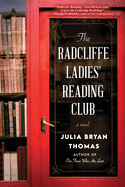
Julia Bryan Thomas's second novel, The Radcliffe Ladies' Reading Club, explores the power of books and unexpected friendships to change women's lives. After escaping an oppressive marriage, Alice Campbell opens a bookshop in 1950s Cambridge, Mass., and starts a book club that attracts four young women from Radcliffe College. The students--aspiring artist Merritt, farm girl Evie, scholarship student Tess, and socialite Caroline--each struggle in their own ways with the transition to college life. Alice hopes to use the book club to challenge the girls' preconceived notions of a woman's place in the world. Over the course of an eventful year, the book club and the girls' friendships do change their lives, though not in the ways Alice (or any of them) expected.
Thomas (For Those who Are Lost) gives readers a peek into each girl's perspective while painting a finely detailed portrait of Cambridge in the middle of the 20th century. During the fall semester, the four girls become fast friends despite their differing personalities, backgrounds, and ambitions. A traumatic incident at a dance leaves the group shaken and splintered--with Alice on the outside, not knowing how to help. Thomas explores the limited range of choices open to (white, relatively privileged) college women in the 1950s when the expectation of marriage and children often still trumped higher education. The narrative centers on the echoing consequences of seemingly small decisions--and the possibilities that such decisions sometimes engender. Thomas's novel is a tribute to books and bookshops and a nuanced portrait of female friendship and its complications. --Katie Noah Gibson, blogger at Cakes, Tea and Dreams