

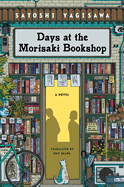
High-brow literary fiction this is not, but Satoshi Yagisawa's Days at the Morisaki Bookshop is brimming with sweet charm, touching insight, and undeniable satisfaction. "I'm getting married," 25-year-old Takako's boyfriend tells her on a dinner date, as casually as he might have mentioned, "Hey, I found one hundred yen on the side of the road." Seeing him and his fiancée every day at work proves unbearable, prompting Takako to quit her job. When Uncle Satoru--whom Takako hasn't seen in more than a decade--offers to let her stay at the family bookshop in exchange for opening the store in the mornings, she reluctantly agrees. In hindsight, she recalls, "without a doubt, that if not for those days, the rest of my life would have been bland, monotonous, and lonely." Third-generation bookseller Uncle Satoru of Tokyo's book district is "so unconventional that he was hard to figure out," but he's got plenty to share, on and off the page, with his listless niece.
Originally published in Japan in 2010 and adapted into a film the same year, Yagisawa's comforting, quotidian international bestseller arrives in a welcome translation by Eric Ozawa; perhaps ironically, Ozawa is a New York University professor who's also a Granta-level literary author. Here, Yagisawa's effortless, unembellished prose ensures a leisurely read, although not without the occasional, realistic reminders of entrenched sexism, privileged posturing, and mental health challenges. With Bookshop in the title, Yagisawa has, of course, written a love letter to the lifesaving power of literature. A sequel was published in 2011, which gives hope to Anglophone audiences that it, too, might travel Stateside in the near future. --Terry Hong, BookDragon