

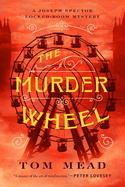
A fairground and a magic show are the scenes of three different crimes in Tom Mead's triply clever salute to the golden-age whodunit, The Murder Wheel. It's 1938, and magic-obsessed London lawyer Edmund Ibbs is defending Carla Dean, following her husband Dominic's murder at a fairground. The Deans were the only people in their Ferris wheel carriage and, upon its return to earth, Dominic was found to have been shot at close range. A pistol was in Carla's hand, but she insists that, although she picked it up from the carriage floor, she didn't shoot it. After Ibbs visits Carla in prison, he spends the evening at Professor Paolini's show, where the magician's crate illusion trick goes seismically wrong: Paolini reveals to the audience not, as is customary, a helper hiding inside the crate but the dead body of another man. And that's not the night's only corpse.
Sure enough, retired conjuror Joseph Spector, who was first introduced in Death and the Conjuror, is on the scene and puts his mind to solving the crime. Rather like a conjuror himself, Mead rolls out a bag of tricks, including word puzzles and crime-scene diagrams. In an old-timey touch, he interrupts the narrative toward novel's end to goad readers into cracking the case, noting that "all the evidence is there, and in plain sight too." Which isn't to say that readers will likely get far with solving The Murder Wheel. Fortunately, although magicians never reveal their secrets, mystery writers do. --Nell Beram, author and freelance writer