

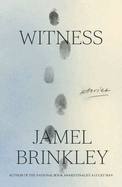
The vagaries of life, from the changing racial composition of neighborhoods to the inevitability of aging, constitute the leitmotif of the 10 stories in Witness, Jamel Brinkley's affectingly melancholy follow-up to his National Book Award finalist, A Lucky Man. The setting, as in his first book, is in and around Brooklyn, with Black communities struggling to adjust to altered circumstances. One story's circumstances are otherworldly: in "Arrows," the Black protagonist has conversations with his dead mother's ghost, who's angry that he's about to sell the family home. But most stories are earthly, such as "Blessed Deliverance," in which five friends wonder what the building that houses an animal rescue used to be, and how a classmate known to dig through trash for uneaten pizza came to be one of its volunteers.
Brinkley's stories shine when they focus on the interstices of behavior that reveal character. Standouts include "Bartow Station," a story of a UPS driver for whom a visit to the world's oldest subway tunnel summons memories of childhood tragedy, and the title piece, which highlights the casual racism Black people confront in its tale of a Black woman whose health concerns white doctors repeatedly brush aside. The stories are downbeat, but the prose is elegant, as when the protagonist of "Arrows" sees an old family photograph covered with his now-blind father's fingerprints: "it was filigreed, an intricate web spread across our faces." Brinkley has produced a second collection that justifies his status as one of the most exciting writers in the U.S. --Michael Magras, freelance book reviewer