

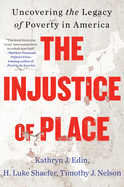
The Injustice of Place: Uncovering the Legacy of Poverty in America transcends genre, combining unparalleled research skills with engaging storytelling. Kathryn J. Edin, H. Luke Shaefer (co-authors of $2.00 a Day), and Timothy J. Nelson here assemble a work that harnesses the most powerful aspects of big data while diving into historic narratives that continue to inform and instruct. The scope of the book is significant, highlighting four distinct localities in the United States that they have identified as the most disadvantaged places in the country. Using their Index of Deep Disadvantage, the researchers found that these communities (in eastern Kentucky, southern Mississippi, rural South Carolina, and south Texas) all have similar obstacles to well-being, including high rates of poverty, poor health outcomes, and significant crime and corruption. Surprisingly, none were in large cities; instead, all were rural areas with a common history of "intensive resource extraction and profound human exploitation not seen to the same degree elsewhere in the United States."
Too often, the researchers argue, studies focus on individual metrics like poverty. The authors insist, " 'disadvantage' is more accurate than simply 'poverty' because it implies an injustice. The term is moral. People are being held back--unfairly." With this ethical focus, the book does more than simply unite large swaths of data around a thesis, though it does that beautifully. At every turn, the argument is clear, cogent, and supported by data--and fully humanized throughout the stories, past and present.
With detailed notes about the development of the Index of Deep Disadvantage, this book is sure to be a meaningful addition to the conversation for academics and socially conscious citizens alike. --Sara Beth West, freelance reviewer and librarian