

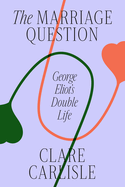
The tumultuous love lives of some of English literature's most memorable heroines are examined through a dazzling intellectual prism by Clare Carlisle in The Marriage Question: George Eliot's Double Life. Presenting revelatory glimpses into her subject's social and domestic life, Carlisle employs biography as a philosophical enquiry into the Victorian author's romantic life, her craft, and her characteristic use of marriage plots as a literary device.
At the heart of The Marriage Question lies the controversial quarter-century union between Marian Evans, known to the literary world as George Eliot, and the love of her life, the already married George Lewes. Despite losing her social standing due to the scandalous nature of their relationship, Eliot's scholarly and creative powers soared after she eloped with Lewes. He understood her aspirations, encouraged her literary pursuits, and became her most loyal reader. But as satisfied as Eliot was in her personal life during this time, her literary characters were not so fortunate.
Carlisle (Spinoza's Religion: A New Reading of the Ethics) is a British philosopher and a professor at King's College, London, as well as a gifted storyteller. Carlisle's inquiry into Eliot's intimate relationships with friends and lovers mirrors Eliot's own psychologically astute interrogation of her characters' "inner lives," exploring themes of desire, sacrifice, freedom, ambition, selfhood, happiness, and motherhood with a cerebral curiosity.
Carlisle illustrates how Eliot expanded philosophical thinking into the intimate realm of marriage and affairs of the heart, her novels a feast of intellectual and emotional drama. The Marriage Question is an eloquent, elegant tribute to the brilliant Victorian novelist who gave voice to hidden female fears and desires. --Shahina Piyarali, reviewer