

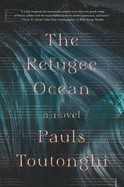
In his gloriously symphonic The Refugee Ocean, Pauls Toutonghi (Evel Knievel Days) weaves a literary counterpoint, presenting two seemingly unrelated narratives that interconnect by novel's end into a satisfying performance. Music--the playing, composing, commemorating of--provides the resonating refrain throughout. By 2014, Naïm's family's luck finally runs out after more than three years of war in Aleppo, Syria. A single blast obliterates their home--a building with 96 residents--leaving only Naïm and his mother alive. Beyond losing his beloved father and younger siblings, the tragedy also leaves him with half a hand--robbing the 14-year-old piano prodigy of his greatest joy. Naïm and his mother's odyssey of survival will eventually land them in Northern Virginia, relying on the sometimes-kindness of strangers.
Almost seven decades earlier, in 1948 Lebanon, music is also at the core of Marguerite Toutoungi's identity. She's fought against the constraints society has assigned to her gender, magnified by her father's demands for unquestioning obedience and her mother's helpless complicity, and yet she's managed to prove her musical prowess. She's expected to marry the prime minister's nephew; it's a union that will solidify her family's socioeconomic standing. But Marguerite has just been accepted to the most prestigious music program in Europe, to which she applied without her parents' knowledge, much less approval. Falling in love with a visiting Cuban heir could be her chance for freedom. As disparate as these trajectories might seem, Toutonghi skillfully layers together their stories, connected by a dying 90-year-old who keeps secrets inside her Steinway grand piano. Beyond unimaginable loss and repeated displacement, music creates a lingering legacy of inspiring tenacity. --Terry Hong, BookDragon