

 Italian philosopher Antonio Negri, "whose essays and activism calling for a new workers' revolution landed him in prison in 1979, and who two decades later became a global intellectual celebrity for writing Empire, a book hailed as the new Communist Manifesto," died December 16 at age 90, the New York Times reported. As a leading figure of the Potere Operaio (Workers' Power) movement of the 1960s and '70s, Negri inspired followers with his forceful essays as well as his willingness to go out to the streets and factories of northern Italian cities, organizing workers and calling for revolution.
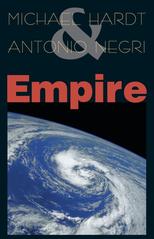
Empire (2000), co-authored with Michael Hardt, "did something similar for a new generation of the left, offering what many found a compelling Marxist interpretation of globalization after the Cold War," the Times noted. "Though it was written in dense academic prose and clocked in at nearly 500 pages, it was an immediate hit." Translated into a dozen languages, the book made bestseller lists "and secured Mr. Negri a permanent slot among the global progressive intelligentsia, alongside figures like Noam Chomsky and Slavoj Zizek."
"What Hardt and Negri offer is nothing less than a rewriting of The Communist Manifesto for our time," Zizek wrote in a blurb for the book.
Negri and Hardt went on to write two sequels--Multitude: War and Democracy in the Age of Empire (2004) and Commonwealth (2009), both of which attempted to outline means of resistance against globalized capital.
Despite criticism that Negri and Hardt had "underestimated the continuing relevance of the nation-state--for example in the Russia-Ukraine war or trade tensions between the United States and China," the Times noted that Negri's supporters claim "his work can also be seen as part of an evolving understanding of the complexities of 21st-century society, in which both corporations and governments have the power to shift geopolitics, while global grass-roots movements can emerge seemingly overnight and change the world."
"Empire was written at a juncture that was completely different than you find today," Sandro Mezzadra, a professor of political theory at the University of Bologna, said. "But there are many ideas in Empire that remain inspiring and challenge us to adapt them to the new conditions of globalization."
Empire is available from Harvard University Press.