

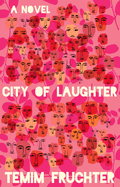
The universal experience of determining who we are by asking where we came from turns specifically Jewish and queer in Temim Fruchter's tender debut. City of Laughter opens under a "perplexing clotted sky" in the city of Ropshitz, where a watchful messenger-cum-narrator begins weaving a story of family, ritual, and love. The novel is as much about the central thread running through Shiva (a grad student simultaneously grieving the death of her father and the end of her first relationship); her mother, Hannah (who carries a lifetime of inherited rites and unanswered questions); Hannah's mother, Syl (a birdwatcher with piles of journaled secrets who died the same day Shiva was born); and Syl's mother, Mira (a silenced girl who became a silent woman) as it is about the interstitial folktales--both real and Fruchter's own--braided through their lives. But almost more affecting than the story itself is its aching core, reminding readers "what families so often don't understand: that the stakes of memory are high."
In exquisite prose, City of Laughter dips in and out of a generational sadness "arcane and ancient, calling for reverence and grief all at once" as Shiva gives into her want to "ask questions with more precision" and journeys to Ropshitz, following the call of something she can't name but must answer. Readers will ponder how the weight of recollection and faith (the "genetics of wanting") ripple across lifetimes, even when those who came before try to still their yearning: "Some lifetimes are smooth and steady, but some are craggy and turbulent and parched. Some, like this one, are mutinous with want." This stunning debut heralds an author to watch. --Kristen Coates, editor and freelance reviewer