

|
|
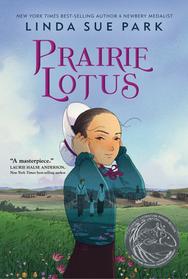
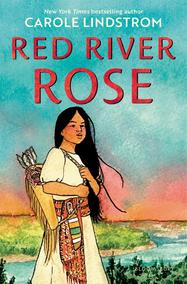
Authors Carole Lindstrom and Linda Sue Park both have new titles inspired by Little House on the Prairie: Red River Rose (Bloomsbury Children's; reviewed in this issue) and Prairie Lotus (Clarion Books), respectively. Like the Little House books, both Lindstrom's and Park's works of middle-grade historical fiction are told from the point of view of a girl in 19th-century North America: a Métis girl watching resistance grow in the face of potential forced relocation in Canada and a girl with Chinese and Korean heritage moving to the Dakota Territory in 1880.
Carole Lindstrom is an author of literature for young people, including the Caldecott Medal-winning We Are Water Protectors. She is Anishinaabe/Métis and an enrolled member of the Turtle Mountain Band of Ojibwe. Newbery Medal-winning author Linda Sue Park (A Single Shard) is the renowned author of numerous picture books and novels for young readers.
Lindstrom and Park chat here about treading on beloved literary ground and how one of their books inspired the other.
Carole Lindstrom: Both Red River Rose and Prairie Lotus offer counternarratives to Little House on the Prairie's description of life in the 1880s--did you worry that writing a different perspective to such a beloved favorite would create backlash from fans? I certainly did.
Linda Sue Park: Yes, I worried about backlash. I thought about this in many ways: from concern that it would affect sales negatively to my own confused feelings about deconstructing what for me had been a touchstone of my childhood. I always used to imagine myself in the LHOP stories, but I knew that Ma would never have allowed Laura to become friends with me. I have a clear memory of re-reading those books repeatedly and whenever anyone, but especially Ma, said anything racist (usually about Indians), I would hold those pages together when I turned them so I could skip re-reading them. Even as a young child, I knew that those comments meant Ma would have been ignorant about me too.
Lindstrom: I cannot get over how similar our feelings were when reading LHOP. I struggled with how ashamed of myself I was when reading them. At the same time, I wanted their close family connection, with a father that showed his love for his daughter like Pa did with Laura. But, like you, I also knew Ma would slap me in the face if I ever came to her door.
|
|
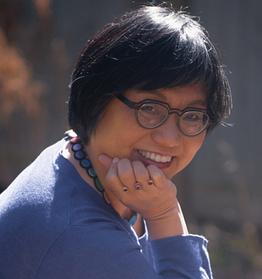
| Linda Sue Park | |
I feel like you gave me permission to write Red River Rose when I read Prairie Lotus. I knew I wanted to attempt to do the same thing from a Native perspective. So, Miigwech!
Park: That makes me ecstatic! I know and love Louise Erdrich's Birchbark series, and I'm so happy that publishing is focusing on contemporary Native stories. But I've been desperate for historical perspectives from marginalized creators, in this case especially Native. One of the things I loved about Red River Rose is how the reader ends up cheering so hard for Rose, her family, and the Métis community.
Lindstrom: I wanted Rose to feel empowered and strong, and I threw myself into her place so I could help my people in an actual historical event. Of course, I knew it wouldn't change the outcome, but it empowered Rose to know she could do something. I think all children want to feel that onus and help in any way they can. It doesn't matter if they fail. In fact, failure is good.
Park: I'm with you 100% about reversing the narrative on failure. We're all much too focused on a narrow definition of success. In my school visits, I talk about how writing for me is a constant process of "failing up." I try and fail but hopefully I'm failing better each time.
 |
|
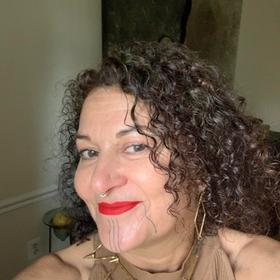
| Carole Lindstrom | |
Lindstrom: Failure is how all the brilliance is discovered--I love to fail! You never know what new things will come from that failure.
Park: I loved how Rose's actions and attempts to help were realistic within the scope of the abilities of a girl her age. It takes me right out of the story when a kid does something huge without adult assistance. I kept thinking how those ideas must have been difficult to come up with plot-wise.
Lindstrom: I remember all the things my son was doing at Rose's age and was flabbergasted at the bravery and courage and strength that he, and all young people, possess. I knew I could have Rose do big things, especially with the help of new friends. Having a community of helpers is so powerful, and I also wanted to show that Rose could only do it if she relied on other people. As a Native person, community is part of everything we do and all decisions that we make. It must be the good of the whole, and not the good of the one.
Park: Yes! With inclusivity work, I want to go beyond more books and creators and stories from different sources. I want a whole new paradigm: one not based on the current model of individual achievement and competition, but on collaboration and community uplift.
Can you tell me a little about your research? One of the things that broke my heart a little when Prairie Lotus came out is that there were people questioning my research, i.e., that where I used a few lines of Dakota speech from one character was inaccurate, because Natives back in the 1880s knew English. Of course, they did--but not all of them. I made a choice which might not have been the choice others would have made, but it was not inaccurate historically.
Lindstrom: I love research, so much so that I often forget to write. As a Red River Métis, I reached out to my community for resources, and I connected with many relatives who shared resources with me. It was difficult: reading the books, I would see my ancestors' names and even pictures of them shackled and chained by the Canadian government. That tore me up. I had to put the book aside for many weeks before I could go back in.
Park: So painful. Writing through pain, hoping that there's hope when we come out the other side.
Lindstrom: And you have a new book coming out in April?
Park: Just One Gift, a companion to my previous title The One Thing You'd Save. Same classroom of kids, and the teacher poses a question to them: If you could give one gift to anyone in the world, who would you choose and what would you give them? The kids discuss, change their minds, influence each other.
I forgot to say earlier: It wasn't until I began reading stories and memoirs about Native life in North America that I found similarities to the respect for elders that we have in Asian culture. That, and gift giving! So, both of those ideas surface in Just One Gift.
Lindstrom: I love that and wish all cultures practiced that same respect.
Park: What do you have coming out next?
Lindstrom: I'm working on the sequel to Red River Rose. Rose and her family have fled Batoche and moved in with family in North Dakota. When Pa suffers a tragic accident on a threshing crew, Rose uses her bravery and ingenuity to help Pa and her family create a new home.
Park: I can't wait to read more about Rose. Seven, I want seven books!