

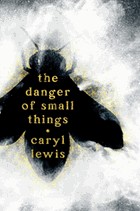
A teenage artist trapped in an all-girl internment camp uses her paintings to protest oppression in Caryl Lewis's darkly beautiful YA dystopian novel.
In the future imagined by The Danger of Small Things, the extinction of bees led to the destruction of modern civilization. Crops failed, famines started, wars broke out, "governments collapsed," and "militias took over." Now, girls aren't "allowed outside... and boys [have] to learn to fight." At 13, pale-skinned Jess is taken from her mother and brother, Shey, to live in a military-run camp where adolescent girls use brushes to pollinate crops "by hand." Once the girls start menstruating, they are married off to husbands "chosen for them based on their fertility compatibility." Jess misses her mother, who taught Jess and Shey how to read and paint, and told stories about a hidden community of rebels who were "free to do as they please." Inspired by her mother's courage, Jess secretly creates art that challenges the camp's leadership, kindling "rebelliousness" in the girls around her.
Lewis (Seed) has crafted an arresting depiction of the power of art to expose injustice and inspire change. Jess's first-person narration conveys her rich artistic imagination; for her, love is "the most delicate coral pink... this sap rising fizzy green... the sootiest deep charcoal that edges a butterfly wing." The grimness of the novel's setting is brightened by the close blonds Jess forms with other misfit girls in the camp and her tentative friendship with a sympathetic young guard. Fans of Margaret Atwood's feminist speculative fiction and of acutely sensory prose like Tahereh Mafi's will likely appreciate this expressive, rebellious novel. --Alanna Felton, freelance reviewer