

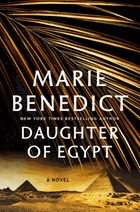
Captivating parallel stories of the pharaoh Hatshepsut, one of the few women to rule ancient Egypt, and the young 20th-century British archeologist obsessed with discovering the mysteries of her reign highlight their common challenges in Marie Benedict's Daughter of Egypt. As she did in her 10 previous novels, Benedict (Her Hidden Genius; The Only Woman in the Room) includes thoroughly researched history plus a revealing profile of women's accomplishments lost to time.
Twenty-year-old Lady Evelyn Herbert of Highclere Castle wins her long-coveted invitation to join her father and Howard Carter, an archeologist, on their annual dig in Egypt's Valley of the Kings in 1920. Their excavations have unearthed precious relics, and Eve is certain they will also discover Hatshepsut's tomb. Her presence on the trip is conditional: she must promise to return for the season of social events her mother has planned in hopes of Eve "making a prosperous match." Benedict alternates between Eve and Hatshepsut, who, as a princess in 1486 BCE, is stunned when her father, the pharaoh, taps her to be in line to rule. As Eve learns, artifacts from her reign were dismissed by early archeologists, who posited that Hatshepsut was a "power-hungry evildoer"--"how else could a woman become a pharaoh?"
Benedict's fascinating depiction of Hatshepsut's benevolent leadership mirrors Eve's sense of justice in refusing to allow the removal of artifacts from Egypt, and it is underscored by the women's movement Eve encounters as the group mobilizes for Egypt's independence from Britain. Daughter of Egypt is an inspiring testimony to the underappreciated wisdom of resolute women throughout history. --Cheryl McKeon, Book House of Stuyvesant Plaza, Albany, N.Y.