 British poet Carol Rumens, "whose Guardian poem of the week column ran for nearly 20 years and was beloved among its loyal readership," died April 25 at age 81, the Guardian reported. Rumens's poems were published in over a dozen collections, including Animal People, De Chirico's Threads, and Blind Spots. She also wrote plays, fiction, criticism, and translated poetry.
Her first collection, A Strange Girl in Bright Colours, was published in 1973. In the mid-1970s, she worked as an editor on Pick magazine before becoming poetry editor at Quarto and Literary Review in the early 1980s.
Rumens published several collections in the 1980s, including Star Whisper and The Greening of the Snow Beach as well as her first volume of selected poems. She also collaborated on the first of several translated volumes by Russian poets, including Evgeny Rein and Irina Ratushinskaya.
She taught at a number of universities, including the University of Hull, where she established an MA in creative writing, and the University of Bangor. Rumens was elected a fellow of the Royal Society of Literature in 1984. Her work was shortlisted for the Forward poetry prize for best single poem twice, and she won a Society of Authors Cholmondeley award.
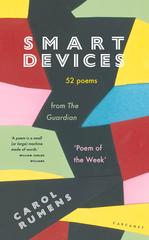
In October 2007, she began writing the Guardian poem of the week column, choosing "Far Rockaway" by the Welsh-language poet Iwan Llwyd, translated by Robert Minhinnick. She would ultimately write nearly 1,000 columns, with the final one appearing in February and featuring two poems by Matthew Rice. In 2019, a collection of 52 poem of the week columns and their accompanying commentaries were published in a book titled Smart Devices.
Writing about the columns on the Carcenet blog in 2019, Rumens observed: "I think I wanted to learn how to think about poems, as well as find out what I thought of them. That's the selfish, self-loving bit. The more altruistic motive is that I feel poets owe each other (or each other's poems) a duty of care. One person can't do very much but they can do something, make a few sounds to erase the stupid silence which hangs around poems and collections of poems.
"I'm sick of hearing that too much poetry is written and published. No, too little poetry is taught and read. A poem isn't usually a butterfly or a mobile phone. It deserves a longer life. I wish I wrote better about poems and poetry, but I know I should go on writing, anyway, as best I can."

