

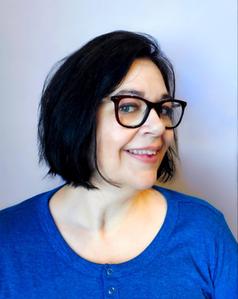
 F.T. Lukens is the author of YA speculative fiction novels including Spell Bound, So This Is Ever After, Love at Second Sight, and The Rules and Regulations for Mediating Myths & Magic. Lukens resides in North Carolina with their spouse, three kids, three dogs, and three cats. The Last Best Quest Ever (Margaret K. McElderry Books; reviewed in this issue) follows a renowned adventurer whose accomplishments are fake, but who must now complete an impossible quest. Here, Lukens chats about the book, talking dragons, imposter syndrome, and some of their favorite parts to write.
You've got an impressive fantasy oeuvre, but The Last Best Quest Ever is a bit more D&D than the others. Do you play?
I have not played in many years. The most recent RPG (MMORPG) I played was World of Warcraft, in which my main was a Blood Elf Mage and my alt was an Undead Rogue. I mainly play card games now, with my recent obsession being Lorcana, in which I play Sapphire/Steel (ramp package) with Amethyst/Steel (control) being my backup. That said, a new set was just released so the meta is going to change and that might change the inks I play! (Amber aggro is looking strong!)
You did a lot of research for Otherworldly--did Last Best Quest Ever require the same kind of research?
Yes. I researched several myths for the creature that eventually became the Elder Beast in the novel. It's based on a folklore creature called the Indrik, which is like the unicorn's cousin. I also needed to fill out the rest of the world. So there was more reading and looking at medieval drawings of griffins and harpies and manticores, etc. Then all the little pieces, like researching bees and wasp habitats for the pixies, what kinds of feathers were used as fletching for arrows, and the meanings of coats of arms for various side characters.
What's the story behind the main character's name?
In Arthurian legend, Sir Pellinore was one of the knights of the round table and is most associated with the questing beast. Also, Dave, the dragon, is named after my friend's cat.
A talking dragon isn't easy to pull off without being silly--but you did it. Was Dave always going to be a part of the book?
Yes, he was Ellinore's BFF from the outline. I wanted to write a dragon because I had recently read a few books with dragons, and I had never written a book with one despite all the fantasy books I've written. However, I didn't want the dragon to be the focus. I wanted to create a world filled with fantasy creatures. And I'm probably the only person who loved the D&D movie, so I knew I wanted to write some kind of quest. And it wouldn't be a quest without quirky characters and shenanigans.
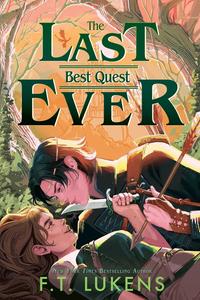 There's a "never meet your heroes" element here, but it's turned on its head because Ellinore's "flaw" is how kind she is.
Yes, I always knew Ellinore was going to be a fraud/imposter in that she wasn't going to complete her quests the "right" way. In a world where fighting dragons is the norm, that led to this "flaw" of thinking outside of the box and leading with knowledge and kindness. Add in the friendship with Dave, which teaches her that magical creatures have whole lives and backstories that she might not know, and she's even more reluctant to complete quests the way others think they should be completed.
Were you at all thinking about the prevalence of imposter syndrome when writing?
I wanted to laugh when I first read this question, because, yes, this book is all about imposter syndrome. Imposter syndrome really is the enemy of creativity. If you're always thinking about how to live up to expectations--how to live up to the last book or the last exam or the last major milestone in your life--how can you move forward? It causes a block or a freeze, and it can be exhausting. There are times when I chalk up success to "luck and timing," which is undoubtedly a factor, but that downplays all the hard work and time and sacrifices that happen as well.
Why is it so hard for Ellinore to see that her fellow questers are responding to her, not necessarily the stories about her?
Her whole life she's been told what the correct version of herself is. She is relying on societal pressure and her perception of what she thinks others want from her, not realizing that her group would love her even without all the fake accomplishments. She's tied her sense of worth to her accolades, and it takes her time to realize that she's worth the love and friendship from the group without those.
She does have a genuine connection with her troublemaker twin.
That was one of the fun parts of the book to write. It's a common trope to have one sibling be a standout successful person while the other one may not be. But the twist here is that Ellinore isn't really the person in the bard's tales, and Zig is much more successful in his line of "work." The fracture of their relationship was something I wanted to explore--going from twins who did everything together, to one of them feeling left behind and the other being thrust into a spotlight she didn't necessarily want, then navigating how to get back to being close once again after the years they spent being resentful toward each other. Healing their relationship means a lot of snarky dialogue and being surprised by each other's skills during the quest to cultivate a genuine desire to be closer.
You really put the whole party through quite the gauntlet!
Yes. One of my favorite obstacles, without being too spoilery, was the "rocks fall, everyone dies" trope moment that is a little Indiana Jones, a little Goonies, and a little bit of the irrational fear of being stuck in a cave.
Even in seemingly hopeless moments like these, there's a brightness underlining the quest. Why is it important to you to write optimistic stories?
Because the world is a mess. It's difficult to be optimistic now--living under a regime that will only be remembered for its deception and cruelty, and those in power being too feckless to put an end to the injustice of it all. Hopefully, readers will find a little hope and respite in a fantasy world where the main character's biggest flaw is kindness and where there are talking dragons.
As we could expect from you, this book is gay. I love it. What do you hope your queer teen readers take away from the story especially?
That you don't have to have yourself completely figured out as a teen. That there is always room to grow and change and that the person you are can be a stepping-stone to the person you will become. --Samantha Zaboski, freelance editor and reviewer