

"It took Benjamin Franklin twenty-seven minutes and fourteen seconds to discover there was pornography on the internet. It was pretty impressive, considering the boy had started from zero."
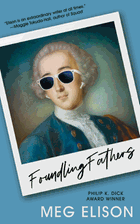
These two small sentences at the start of Meg Elison's Foundling Fathers set the tone for this small but mighty work, a brilliant and absurd bit of speculative fiction that considers: What if human cloning were possible?
What follows is a brutal imagining of this kind of scientific potential in the context of 21st-century U.S. politics, driven by power and greed and a desire to be "great," absent the moral reckoning required in unpacking the mythology of history. In Elison's speculative 2026, the ability to clone humans has been used not to advance scientific breakthroughs, cure diseases, or feed the hungry, but instead to rebirth the Founding Fathers in a misguided attempt to return their perceived genius to the political mess that is the United States. "The only way forward is to go back," the moneyed elite argue in a board meeting miles from where the cloned boys are being raised to believe it's 1750; "to re-center this nation on its founding principles."
Like all good satire, some of these revelations are uncomfortable, some disturbing. But Elison's sharp sense of humor keeps the novel from ever feeling heavy or pedantic. Foundling Fathers is a timely send-up (and takedown) of the billionaire ruling class, a delicate unpacking of the myths of the U.S.'s earliest days, and a sharp and insightful work of satire that cracks the very foundations of the present political moment in ways that are as necessary as they are unsettling. --Kerry McHugh, freelance writer