

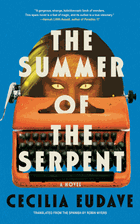
Cecilia Eudave, among Latin America's literary vanguard of "narrativa de lo inusual" (narrative of the unusual), makes her English-language debut with the haunting novel The Summer of the Serpent, translated from the Spanish by National Book Award winner Robin Myers. Reminiscent of interlinked short stories, Eudave's work presents a polyphonic chorus, many of the voices quite young, who are all residents of an unnamed Mexican neighborhood, as they reveal their versions of what happened during the summer of 1977.
That "was an unforgettable year," Maricarmen, the precocious initial narrator, comments, listing global events, lumping together Augusto Pinochet, Son of Sam, Elvis Presley. "And here, in Mexico? The National Family Planning Plan was approved, because we were so many and so violent." She's "still a little girl" visiting the San Antonio Parish fair with her father and younger sister, where she's "a front-row witness to the spectacle of the serpent girl."
Shrouded within this veneer of a seemingly typical community are unexpected inhabitants. One house is home to a "sweetly chameleonic" ghost who first tells the story of a "chubby baby-faced man" who hangs, but somehow doesn't kill, his fox terrier at 7 p.m. every day, except for Sundays. Monika, a neighbor, has a pet boa constrictor that's carefully planning its escape, even as it's admired and occasionally coveted by the local children. Eudave shifts viewpoints between her nine chapters, as if determined to further unsettle readers. She unblinkingly contrasts the innocence of children with the heinous behaviors in their midst that particularly threaten girls and young women. Eudave's startling fiction effectively holds a twisted funhouse mirror up to reveal disturbing realities. --Terry Hong