

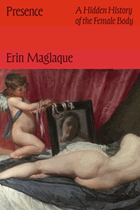
Erin Maglaque, a historian and assistant professor, explains in Presence: A Hidden History of the Female Body, "I wanted not only to write a history of the female body, but a book that made the body into method. I began from the smallness of my own life."
The nine fascinating, flowing chapters, which cover early modern European women's relationships with food, pregnancy, abortion, birth, sleep, breastfeeding, desire, drudgery, and dying, frequently begin or end with Maglaque's personal reflection and memories. Her technique is quite beautifully intentional, since one of her concerns is showing the links between historical and modern female experiences. After Maglaque's introduction in the chapter focusing on food, she shares her encounters with her grandmother's self-starvation, and in a later chapter, she recounts the story of her son's birth, which included the use of forceps (a 17th-century invention). The chapters integrate many quotations, including from midwifery manuals and, often, from court documents kept during the Inquisition.
In many instances, however, Maglaque runs into the problem of the gaps in the archive, an archive that is overwhelmingly from the male perspective. These documents rarely capture female desire or the experiences of nursing or feeling "the quickening" (the detection of fetal movement). Maglaque probes why these circumstances might be unrecorded and how she's connected with them in her own life. Presence is a nuanced and multifaceted book, full of curious historical tidbits and an inquisitive personality. --Nina Semczuk, writer, editor, and illustrator