

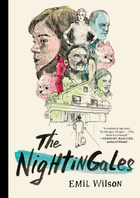
Emil Wilson's magnificent graphic novel debut, The Nightingales, melds startlingly vulnerable storytelling with extraordinarily spectacular art. His protagonist, Lou, introduces herself as "almost eighteen. Almost out of high school. Almost ready to go to college and get my life started." Over the course of 400 pages, her path will take sharp, unexpected turns.
It's April 1985 in small-town Oregon. "This story is based on something that happened years ago. It's mostly true," Lou insists. She's often caught between her acerbic mother, Annemarie, and ineffective father, Don. Lou's brother, Emil, warned when he left last September for college, "I'm never coming back to this shithole. If you were smart, you'd leave as soon as you can." And then one night over dinner, Don announces that his co-worker, Jim--and his two dogs--will be moving into Emil's room. Jim's been evicted, is "going through some hard times," and has "cancer." Annemarie barely contains her disdain, eventually becoming unbearable when Jim's illness is revealed to be AIDS. Lou, however, forms an unlikely friendship with Jim. His unfiltered vulnerability, particularly about being a joyful gay young man in New York City, inspires Lou to chase her own dreams.
Wilson presents his novel as a personal rubber-banded sketchbook, underscoring its intimacy. He brilliantly layers multiple mediums--line art, colored-pencil sketches, swaths of watercolor, taped squares of typed dialogue--creating invitingly dynamic spreads. His author's note confirms the narrative's autobiographical provenance but also reveals how it's not a memoir. Alas, the fate of Jim's two dogs remains unknown. What lingers is a glorious, gorgeous journey for a young woman just discovering how to live. --Terry Hong