

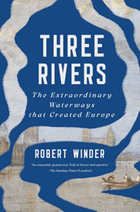
Europe looks different from the water. Three rivers: the Rhine, the Rhône, and the Po, all start within a few miles of one another in the Alps, fed by snowmelt from the same high granite, before splitting apart to carve their separate paths toward three different seas. Robert Winder, former editor at Granta and the Independent, investigates how this geographical accident is the key to understanding Europe itself.
Winder moves through centuries of history, interested in how water shapes behavior: how a river determines where a city grows, which crops take root, where armies march, or how long a rumor takes to travel. The Rhine became a highway for the Reformation and a moat for war. The Rhône carried Roman legions and Burgundian wine northward in roughly equal measure. The Po fattened the plains of Lombardy, nourishing the grain and rice that fed Renaissance painters and composers, among others, throughout the years.
The author gives nearly as much weight to the medieval politics of Avignon and the acoustic properties of a Rhenish cathedral as he does to narrating the larger sweep of European nationalism. These digressions feel like the texture of real life, the way history actually gets lived, sideways and in small detail rather than in the tidy chapters of a history book.
There is also a melancholy undertow here, too, because of the many challenges these rivers are facing from industrial pollution and the various expressions of climate change. Nonetheless, the journey through Three Rivers is well worth taking for readers who enjoy a landscape-as-history narrative. --Elizabeth DeNoma, executive editor, DeNoma Literary Services, Seattle, Wash.