

_Prasenjeet_Yadav.jpeg)
|
|
| Kulbhushansingh Suryawanshi (photo: Prasenjeet Yadav) |
|
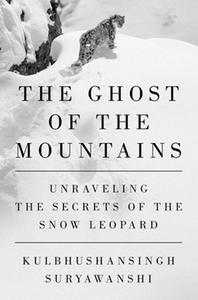
Kulbhushansingh "Kullu" Suryawanshi is an ecologist and conservationist who has spent almost two decades studying snow leopards in the wild. He is a Fellow of the British Ecological Society, the director of the India program of the Snow Leopard Trust, and a scientist with the Nature Conservation Foundation. He is a CIFAR fellow and National Geographic Explorer and was a fellow of the Wissenschaftskolleg zu Berlin. He lives in Bangalore, India, with his wife and daughter. The Ghost of the Mountains: Unraveling the Secrets of the Snow Leopard (Riverhead; reviewed in this issue) is his thrilling debut.
Snow leopards are elusive. Why choose to study an animal that is so hard to spot?
There was a lot of research on charismatic species like the tigers, lions, and elephants, but few people would go to the mountains and look for snow leopards. I took a gamble and said, "If I combine my mountaineering together with my education, maybe that is what will help me study the species." At the same time, binoculars and cameras were getting better. DNA technology was getting more accessible. Much of the research until the early 2000s was done by people living alone or in a small team of researchers. Around that time, they started living and working with villagers. A combination of mountaineering skills, education, and working with local people helped me see the snow leopard many times in the beginning, and that was my proof of concept.
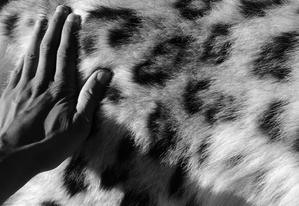 Are snow leopards as soft and fluffy as they look?
They are fluffy but collect a lot of dust. I remember my first reaction on touching a snow leopard. It felt like touching aluminum wool charged with static electricity. There was a dissonance between what I saw and what I felt. It is a wild sensation.
What's a day like for an ecologist in the field?
One must be open to change. You may have planned something the evening before, and the minute you step out of the door, conditions change, especially in the high mountains. You often spend months planning field work. When you go to the mountains, initially it's all about acclimatizing to the elevation, the cold, the different conditions. You collect data and test out what works. It might seem to make sense to collect data in the middle of the day, but I learned mornings are a great time to collect data. In the afternoon, it starts to warm up. There are avalanches, and snow becomes slushy. Mornings are cold but stable. I learned that autumn is a great time to collect data, unlike spring, when everything is melting, and it feels like the world is coming apart.
Along the way, you course-correct. Your car breaks down, your field camp burns down--you know, things happen.
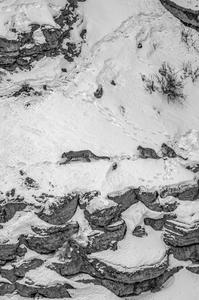 Is there a particularly difficult situation you're thinking of?
A colleague broke his shoulder and had to evacuate. I had to decide whether to stay or abandon the work. If there is a place that defines the phrase "the middle of nowhere," it's the Gobi Desert. To be in my 20s and faced with the choice of whether to live there alone was quite a moment. Living there is not as hard as making that decision.
I've had scares where you have a constant eye on the weather and the pass, because there's only one mountain pass that you can get out of. You're constantly on edge, calculating how much time it will take from your position to exit the pass under bad weather. It feels like a simple equation, but it never is. You have different amounts to lose, in terms of data, equipment, your own health and well-being, and your friends and colleagues' health and well-being.
I've had incidents where we lost colleagues and were launching rescue expeditions for days. We always found them, but on multiple occasions they were in bad shape, both mentally and physically.
 On the other hand, can you think of some rewarding experiences?
Absolutely! The biggest reward comes when you find a snow leopard on your own, because it gives you a sense of accomplishment. It is as if you were to take a helicopter to the summit of a mountain versus hike the mountain on your own. When everything comes together, and you've walked for days on end, read the weather, the land, and the behavior of the animals right, and then you see them, it feels like you're graduating.
There is also a wonderful satisfaction to sitting by the fire in the evening, knowing that you've had an honest day in the field, come back with the data you went to get, watched your animals, climbed your mountains.
I also feel a sense of reward when working with local people. Sometimes it's helping them finish their agricultural work when the weather is closing in. It might be predator-proofing a corral. People don't see the snow leopard as the big, bad wolf. They see it as part of their day-to-day lives, like bad rain. When they have an opportunity to appreciate the snow leopard, you feel the thrill and excitement with them.
What's one message about your work you wish you could spread to other people?
People and wildlife are not two separate things. Whether we like it or not, carnivores belong everywhere. Often people are on hiking trails and see carnivores there. They feel the animal doesn't belong. But you belong on the hiking trail, and the animal belongs. You just have to find ways of getting around each other. An acceptance of that fact will allow us to create lives which are more accommodating of them. People are surprised to know carnivores live outside protected areas. Working with that knowledge to manage our surroundings opens up the possibility for conservation to go from 2-5% of the global land mass, which is what protected areas cover, to having 80-90% available.
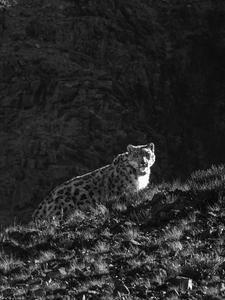 How have you honed your writing skills?
I came from a small town, and my window to the world was through books and libraries. When you're spending that much time with books, I think you assume you're going to write one.
I was never a bright student in school, but in eighth grade I wrote an essay, and somebody copied it. I was asked to present myself in the principal's office, because the principal wanted to figure out who copied who. When it turned out I was the writer, they were surprised. That was the first hint that I could write.
What is next for you?
I'll continue working on snow leopards and other carnivores. In my home state of Maharashtra, tigers have killed over 100 people in the last 10 years. I'm trying to find ways of writing about tigers which are not polarizing or romanticizing, but that help people appreciate why we need to have tigers. How can we live with them without one of us killing the other? My grandfather shot the last tiger in our region. In some ways, it defined the rest of his life and the early part of my life. Now tigers are walking back into this landscape. I'm interested in how they shaped my family's history. --Jaclyn Fulwood