

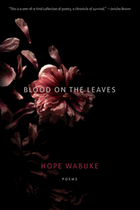
Ugandan American poet Hope Wabuke's second collection, the resolute and radiant Blood on the Leaves, illuminates motherhood in a time of racist atrocities and climate anxiety.
Wabuke's parents escaped Idi Amin's genocide. Remnants of their ordeal would surface in unexpected places. For instance, in the stunning opener, "Ode to Kale," the speaker serves her son healthy fruit-and-vegetable-juice ice pops while they're living in a domestic violence shelter. For her, kale embodies maternal care; for her mother--who embraced American junk food and later developed diabetes--it was a reminder of refugee helplessness: "It is a weed the starving eat/ in Kenya and I will not." Shame and grief mingle after her mother's death. Meanwhile, Wabuke (The Body Family) explores how being African American entails a history of generational trauma. A visceral sonnet corona honors lynching victim Mary Turner, and poems express righteous outrage at police murders of unarmed Black boys and exploitation of enslaved people.
Reverence for nature is an equally compelling theme. One of several poems titled "Blood on the Leaves" decries Uganda's 80% forest loss; in "Regret," a felled tree is an example of something that cannot be undone. The speaker embraces the Nebraskan prairie's beauty yet fears Midwestern weather extremes. "This Is Normal" ("the world is on fire and this is normal") ponders survival in a future climate. Like the doe in "Visitors," Wabuke prioritizes her child's safety and crafts cozy seasonal rituals, defying worry over abnormal mammogram results.
Against life's risks and sorrows--of aging, bereavement, injustice, and environmental degradation--this gorgeous verse stands firm. --Rebecca Foster, freelance reviewer, proofreader, and blogger at Bookish Beck