

|
|
| photo: Ayelet Tsabari | |
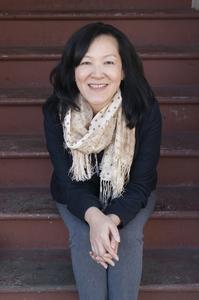
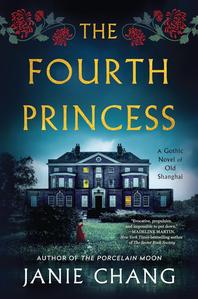
Janie Chang is a Globe and Mail bestselling author of historical fiction. Born in Taiwan, Chang has lived in the Philippines, Iran, Thailand, New Zealand, and Canada. She is the author of Three Souls, Dragon Springs Road, The Library of Legends, and The Porcelain Moon; and co-author with Kate Quinn of the USA Today bestseller The Phoenix Crown. The Fourth Princess (Morrow, February 20, 2026) is a gothic novel set in Old Shanghai and centered on two young women living in a crumbling, once-grand Shanghai mansion.
Handsell readers your book in 25 words or less:
A Shanghai gothic novel. A young Chinese woman finds work with an American heiress. Both have secrets, and so does the mansion where they live.
Favorite book when you were a child:
A Wrinkle in Time by Madeleine L'Engle. I didn't know what science fiction was back then; in fact, it took a while before I realized there were genres in fiction. It was just a really good story about travel between dimensions, good and evil, familial love. There were godlike beings but in the end, it was the children who had to save themselves.
Your top five authors:
Iain M. Banks: If anyone says that science fiction can't be literary, they haven't read the Culture series by Banks.
Emily Brontë: I read Wuthering Heights at a very young age and have been fascinated by the lives of the Brontës ever since. Two years ago, I went to Yorkshire, and I made what can only be called a pilgrimage to the parsonage at Haworth, now a museum. The museum gift shop had a very good day.
Timothy Findley: Imagination, storytelling, wonderful writing. I've enjoyed all his books including one called Inside Memory, which is about the craft of writing but also about his life in the arts.
Guy Gavriel Kay: When his first book of poetry came out, it explained his exquisite prose. He's a poet who tells stories.
Claire North: Brilliant and imaginative. She can write anything, it seems, from urban fantasy to speculative fiction, to myths, and her latest novel is a space opera.
Book you've faked reading:
The Luminaries by Eleanor Catton. It was so intimidatingly thick that I kept postponing, and now it's metaphorically at the bottom of my TBR stack.
 Books you're an evangelist for:
Anything by Claire North but especially the trilogy of Ithaca, House of Odysseus, and The Last Song of Penelope. At first reading, it's a feminist retelling of the story of Penelope and how she managed while Odysseus and the men of Ithaca were off fighting the Trojan War and adventuring their way back. How she managed as in: on an island emptied of able-bodied men, who kept the economy going? The fishing, the farming, trade with other nations? How to feed the suitors who lounged around the palace, waiting for Penelope to choose one to marry? Read a bit deeper and there's a geopolitical dilemma: Who could she marry without starting another war or endangering her son?
Book you've bought for the cover:
The Ghost Brush by Katherine Govier. It's rare to see Japanese art on the cover of a book by a non-Asian author, and the image was so intriguing--stylized and unmistakably Japanese, a woman holding a brush and book, her lamplit skin as white as the cherry blossoms in the background. This remains one of my favorite books, the imagined life of Oei, daughter of the famous artist Hokusai of The Great Wave. She's rebellious and irascible in a time and culture that rewards obedience. There is evidence that it was Oei who created works attributed to Hokusai during his final years.
Book you hid from your parents:
Nope. They really didn't pay attention. They were just happy that I liked to read but they did worry that excessive reading would damage my eyesight.
Book that changed your life:
Dune by Frank Herbert. I was perhaps 12 when I first read this book, and while I had read other works of science fiction (Ray Bradbury, Robert Heinlein), none of them pulled me into the world of the story like this one. Even at that age, I sensed that there were layers of subtext in the story, politics and religion, the notion of playing the long game, and themes of our own history. It was unbelievably immersive and alien, while at the same time familiar enough to grasp quickly. Later, I would understand this was known as "worldbuilding." All I knew then was that the landscapes, people, and technology were so vivid that scenes unfurled in my mind as I read. I felt the heat of the sand dunes, the parched air of Arrakis, and understood for the first time the power of words beyond mere storytelling.
Favorite line from a book:
"My mother is a mystery to me. Between us is a barrier of language and disposition." --Birds Art Life by Kyo Maclear.
This book is a meditation on loss, a beautiful memoir that I've bought as a gift many times over for friends in grief. Maclear is part Japanese and this rather rueful quote resonates with me because it describes so concisely the interactions I had with my own mother.
Five books you'll never part with:
The Chronicles of Narnia series by C.S. Lewis (so actually seven). When my original box set of paperbacks fell apart, I bought a hardcover set. The illustrations by Pauline Baynes are part of the appeal for me because she spent her childhood in India and some of the background botanical elements of her drawings echo those of Indian and Persian miniatures, familiar to me from the years our family lived in Iran.
Book you most want to read again for the first time:
Not Wanted on the Voyage by Timothy Findley. The story of Noah's Ark but not the way you think. Irreverent, imaginative, astonishing. The characters mirror the best and worst of humanity without once resorting to cliché. Not easy to read, emotionally, which is why I wish I could read it again without knowing what's to come.