

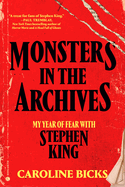
 In 2017, Caroline Bicks was named the inaugural Stephen E. King Chair in Literature at the University of Maine. Four years later, she invited King to give her students craft advice. He generously granted her interviews and extended access to the personal archive at his home. Her fourth book, Monsters in the Archives, is a fascinating insider's look at King's process and themes, offering insight into five early works--and her experience rereading them as an adult facing childhood fears.
Bicks (Shakespeare, Not Stirred) first encountered King via his 1978 short story collection, Night Shift, which she read when she was 12. Growing up in New York City, she recalls, she suffered from baseless anxiety. Reading King's classic horror during summer vacations in Maine was a way of indulging fear safely to achieve catharsis. The tale "The Boogeyman," about a closet-dwelling monster, haunted her thereafter. Bicks insists on King's power to create lasting moments that scare even him (e.g., the tub scene in The Shining).
Each chapter contains an appealing blend of biographical exploration and literary critique. King's stories often took inspiration from his life: Pet Sematary--his son nearly running in front of a truck; The Shining--a visit to a haunted Colorado hotel; Night Shift--the anger spurring college anti-Vietnam War protests; and 'Salem's Lot--his move to Maine with his single mother at age 11. The Shining is a cultural touchstone, though equally for the (significantly different) Stanley Kubrick film. A half century after its publication, Carrie remains unfortunately relevant for its storyline of high school bullying and revenge.
With its close readings, Monsters in the Archives affirms that King's oeuvre merits serious scholarship. It also pinpoints connections to Shakespeare, Bicks's research specialty--The Shining was originally modeled on a five-act Shakespearean tragedy and references Macbeth. Through archival work, Bicks traces King's writing practice. As a penniless beginner, he kept lone copies of typewritten manuscripts and there were several near losses of work. Meanwhile, his editorial changes reveal the development of themes. In 'Salem's Lot, edits reinforced the evil's source within the town; in Carrie, he downplayed mentions of demonic influence, instead emphasizing the protagonist's traumatized humanity.
Readers can't fail to be enticed to try more by King. (Bicks discusses plots in detail, and quotes at length, so spoiler-phobes might want to skip pages here and there.) This isn't just for horror buffs, but for anyone curious about archival research, literature, and writers' lives. --Rebecca Foster, freelance reviewer, proofreader, and blogger at Bookish Beck
Shelf Talker: The Stephen E. King Chair in Literature at the University of Maine gives an enthralling behind-the-scenes account of the horror author's life, work, and editorial process.