

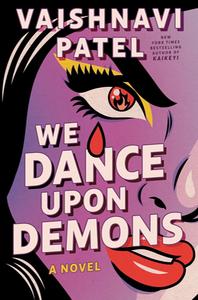
 In Vaishnavi Patel's fiery, defiant contemporary fantasy We Dance Upon Demons, an exhausted Indian American reproductive health care worker becomes the target of demons when she accidentally obtains magical powers.
Ash Wednesday unleashes a deep dread in Nisha, who knows the Lenten season brings with it 40 days of even more intense protesting than usual at the Chicago clinic where she works. This year has brought the usual onslaught plus a startling surprise: Nisha's ex-boyfriend Aaron, whom she remembers as an anti-abortion protestor, is the clinic doctor's new resident. Nisha decompresses at the Art Institute, where an ancient Nataraja statue catches her attention. She touches it and suffers a fainting fit. She recovers but soon finds herself contending with unusually aggressive strangers and hallucinations of a "stocky red-skinned demon with hooves instead of feet."
Then she meets Muya, an aspect of the ignorance demon Muyalagan. He explains that she inadvertently freed him from his prison in the statue and absorbed some of his demonic power, giving her the ability to change reality. Muya demands she return his magic; when she does not believe his story, he charges her to look within herself. Nisha reconnects with her love of dancing Kathak, and it allows her to see the brave, subversive, and marginalized women who have carried Muya's power in past centuries. Each woman has a story and a message for Nisha, from "We are unyielding... Choose hardness," or "We are fierce... Choose revenge," to "Choose to be content." However, fiercer demons than Muya want Nashi to surrender the power to them, and they will not hesitate to threaten her friends, family, or the clinic she believes in to get it.
Patel's harrowing vision of the fight to provide reproductive health services in a post-Dobbs United States confronts burnout, depression, and the constant threat of violence facing women's rights advocates. Nisha's passion around the topic can sometimes veer into didacticism, but Patel (Ten Incarnation of Rebellion; Kaikeyi) does an admirable job of capturing the boiling rage surrounding the rollback of reproductive rights. The story's supernatural components work to underscore and intensify the human conflict as well as show an endless chain of support spanning centuries. Nisha's journey from the disillusioned belief that she can change nothing to an understanding of the power every individual can hold is charged with the strength of women, community, and the belonging she finds in her family and culture. --Jaclyn Fulwood, blogger at Infinite Reads
Shelf Talker: A reproductive health care worker becomes the target of demons when she gains magical powers in this passionate, defiant contemporary fantasy.