

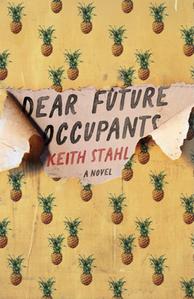
 Keith Stahl's first novel, Dear Future Occupants, relates the poignant, madcap adventures of a dysfunctional but essentially loving family. In March of 1979, Bud Sommer moves his family back to Greenhill, Conn., having inherited his childhood home, a massive, crumbling 17th-century estate. Bud, a sometimes painter and aspiring restaurateur, has also used his wife Rebecca's inheritance to purchase a nearby diner. Joining Bud and Rebecca are their middle-school-aged sons, Victor and Wade; their eldest son, Herman, who has spent recent years hitchhiking around the nation; and the family dog, named The Dog. Victor, who has been bullied at school, begins running around with the "lav rat" kids, who smoke in the restrooms. Meanwhile, his little brother, Wade, a piano prodigy, experiences one accidental injury too many and chooses to wrap himself in bubble wrap around the clock. Long-haired Herman likes to wear women's clothing, to the great distress of his parents. A literal skeleton is discovered in the basement of their dilapidated home, and a local adjunct professor moves in to study it. One absurdity after another plagues this motley household, until it seems that something will have to give.
The Sommers experiment with church, rehab, open mic nights, therapy, and a new business scheme that involves hiding buds of high-grade marijuana in boiled liver, thyme, and wheat-germ sandwiches. Stahl's narrative shifts perspectives: Bud and Victor tell their first-person stories in alternating chapters, interspersed with Herman's ventures in creative writing, which include short stories, poetry, and satirical news articles. Wade and Rebecca, as well as other colorful characters like Bud's beautiful young waitress, Cassandra, and Victor's school ally, Strom Luger, remain observed rather than observers. Stahl's background in poetry colors his detail-rich descriptions of such zany episodes as family Wiffle ball tournaments, their visit from Child Protective Services, and Bud's imaginative game of gruesome food-service deaths. The personalities of Stahl's outlandish characters engender often surprising humor.
Against the backdrop of conservative small-town Connecticut in 1979, the Sommers grapple with concepts of family, sexual identity, counterculture, and drug and alcohol use. With pathos, humor, compassion, and great energy, this novel offers a moving examination of the meaning and acceptability of Herman's cross-dressing and the value of family--in general and in this sweet, troubled individual case. The title of Dear Future Occupants refers to the marks left on the Sommer home; its story is arguably about the tension between conformity and authenticity in the Sommers' impact on a larger world. The result is preposterous, exuberant, and tender. --Julia Kastner, blogger at pagesofjulia
Shelf Talker: An unusual family navigates small-town Connecticut in 1979 with wacky adventures, conflict, and love in this funny, affecting debut novel.