

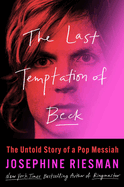
 Seasoned culture writer Josephine Riesman probes the wild and weird career of a mononymous musician whose eclectic arrangements and idiosyncratic lyrics flabbergasted the music industry. But The Last Temptation of Beck: The Untold Story of a Pop Messiah searches beyond the boundaries of hagiographic nostalgia and instead boldly centers Scientology within the equation of Riesman's savvy analysis.
In January 1994, Beck Hansen lumbered down a dirt road and into American households with the MTV debut of "Loser," a lo-fi single that had been catching fire on college and modern rock radio stations for nearly a year. The mordant slacker anthem was a culmination of everything the young countercultural artist had absorbed from the antifolk music scene around Los Angeles, and it propelled him to monumental celebrity status over the ensuing decade and beyond.
But the Beck who gave interviews and autographs often evaded discussions about religion, growing even more cryptic in public than the nonsensical babbling he poured forth on an increasing number of albums. According to Riesman, many of Beck's early associates were gradually crowded out of his team and replaced by members of the Church of Scientology. By the 2002 release of his eighth studio album, notably titled Sea Change, Beck was inaccessible to many who had been closest to him up to that point. In July 2007, Sea Change cover art designer Jeremy Blake and his girlfriend, Theresa Duncan, died by apparent suicide after drafting an extensive allegation of targeted harassment from church members.
To gauge the shape of her enigmatic subject, Riesman (Ringmaster; True Believer) gathers an impressive array of interview sources that include musician collaborators, the webmaster for Beck's popular fan site, and firsthand witnesses to significant events both public and private. She also wades through available family history, extensive music criticism, and piles of research on the notoriously secretive Church of Scientology, a religion into which Beck was born and through which his father holds great influence.
But The Last Temptation of Beck is no hit piece. Riesman brings a great deal of empathy to her subject as a longtime fan. Hers is a portrait of a man in conflict: with his great passion for music, he is vulnerable to exploitation by an institution obsessed with celebrity and capable of fierce intimidation tactics. In a heartfelt coda, the author lays bare her own vulnerability to describe how Beck's image as a svelte counterpoint to conventional masculinity propped open the closet door for her as a transgender woman. And it's this measured yet personal approach that makes Riesman's investigation every bit as complex and intriguing as the pop star himself. --Dave Wheeler, senior editor, Shelf Awareness
Shelf Talker: Josephine Riesman's captivating profile of the Gen X pop sensation boldly parses the influence of Scientology on his life and career.